
Calling Home: An Artist’s Journey Between Two Worlds
For most of my life, I searched for a place that felt truly mine. It wasn’t just about geography—it was about identity, belonging, and peace. I didn’t expect to find the answer by leaving home.
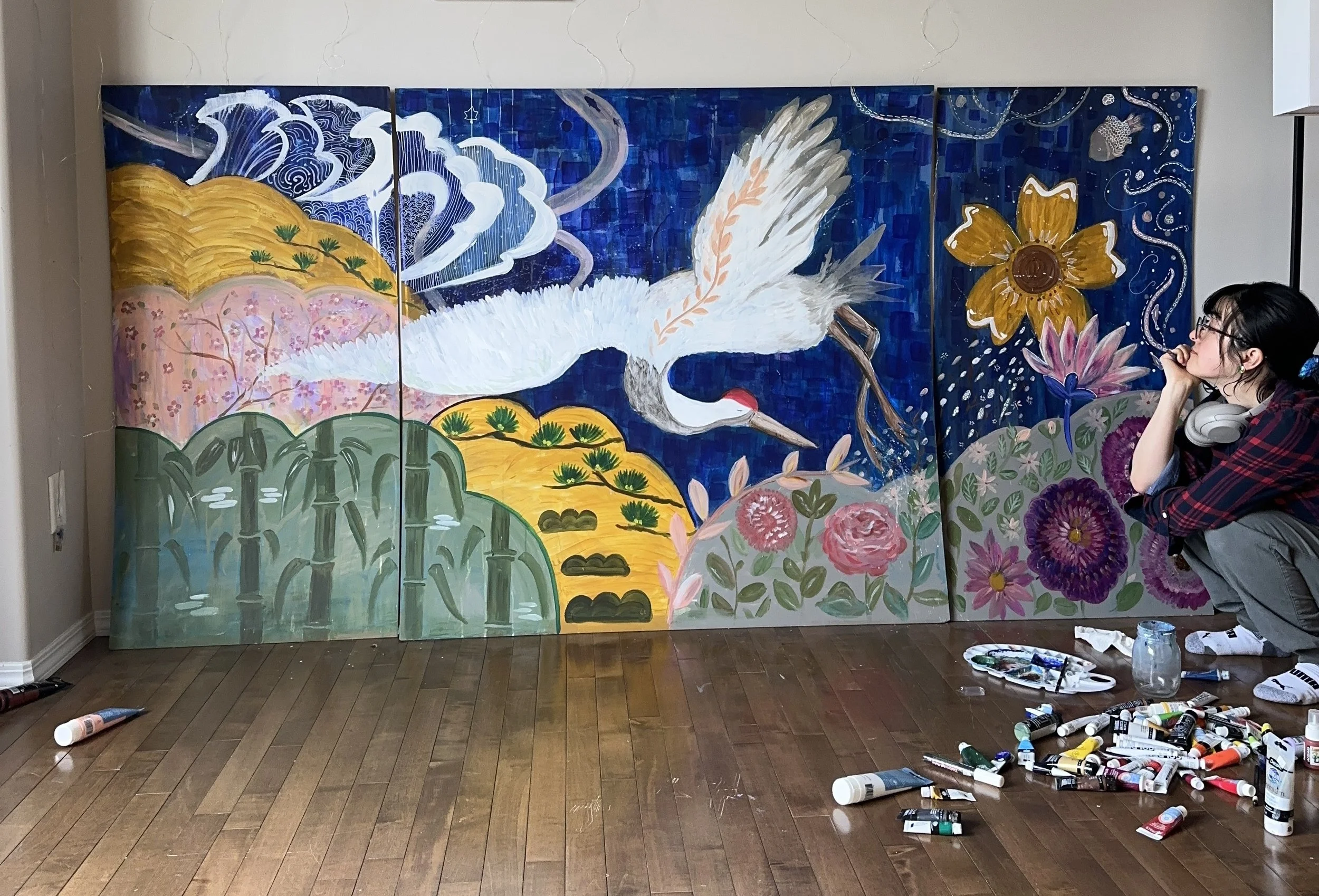
Shaping What Fades きおくのかたち l Acrylics.
I am an artist currently living in Saskatoon.
I was born in Funabashi, Chiba Prefecture, Japan. It’s not exactly the countryside, but compared to central Tokyo, it’s a quieter residential area with a more relaxed atmosphere.
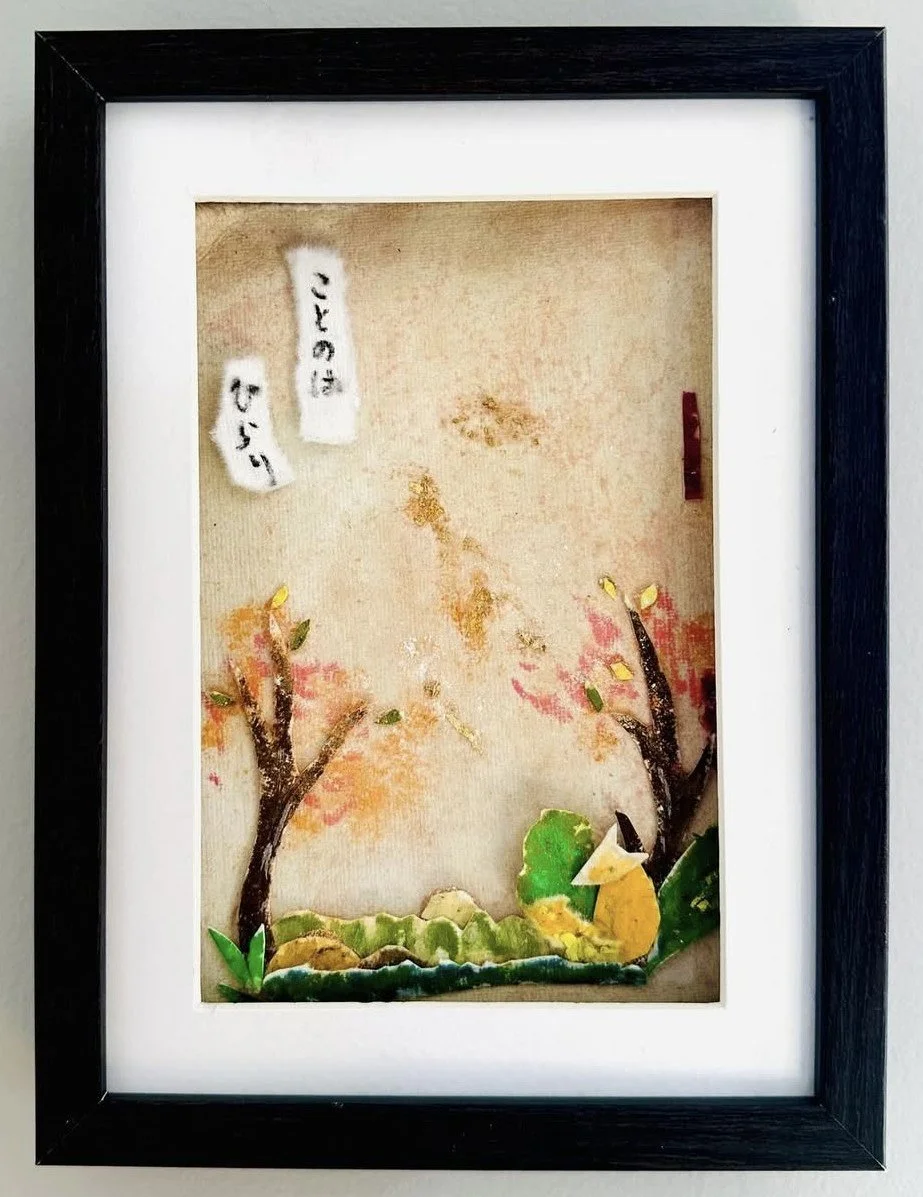
A piece from the Calling Home Project, a series of papercraft works inspired by Japanese folk songs and fairytales.
The cultural differences between Canada and Japan are striking—not only in language but in habits, values, and daily life. For example, hugging isn’t a common greeting in Japan, and tipping for good service is practically unheard of.
I moved to Canada without knowing much, and after about six years, I started a new chapter of my life in Saskatoon.
People often ask me, “Why did you leave Japan?”
One of the biggest realizations I’ve had since moving abroad is that being outside Japan has given me more opportunities to rediscover its beauty. That’s not the only reason I left, of course, but seeing Japan through the eyes of those curious about it has helped me notice things I’d never considered while living there.
It’s been a fascinating experience—one that deeply influences my art today.
Though I now live far from Japan, I carry it with me—in my thoughts, memories, and the lines I draw. Through my artwork, I want to share my experiences and culture with those willing to look. This, I believe, is my way of giving back to Japan—and loving it in my own way.
Japan is known for anime, tea culture, and architecture, but so much more remains unfamiliar to the rest of the world. I grew up surrounded by those lesser-known aspects of culture, accepting them as part of daily life. Sometimes they still show through in the way I speak, move, or act—even unconsciously. At the same time, I feel myself gradually changing as I adapt to life in Canada.
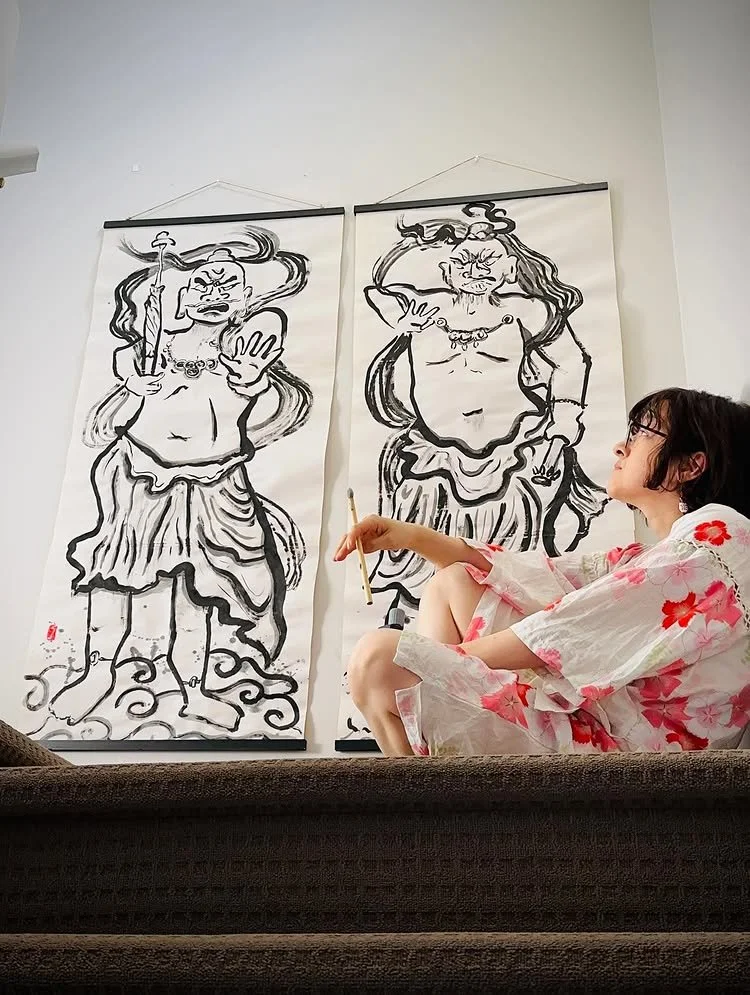
Ogawa with paintings 'A and Un'. These two Kongōrikishi (Niō) statues are inspired by the concept of yin and yang.
When I visited Japan two years ago, something surprising happened. Even though I was standing on streets I had once known so well, everything felt like a foreign country. I later learned this is called “reverse culture shock.” That experience left me confused about the idea of “home.”
I was born and raised in Japan, yet the landscape and environment no longer felt familiar. But living in Canada, I still speak English with a strong accent, and people often ask me, “Where are you from?”
What is home, really? For a long time, I carried that question with me, feeling like I was floating with no place to land.
But recently, I’ve come to understand something important: home is not a physical place. It can be found in habits, within ourselves, or in the communities we belong to.
I used to worry because I didn’t have a clear answer to where my true home was. But now, I see it in the small gestures I make without thinking—in the park paths I walk often, in the local events that warm my heart, and the connections I build with people who share my passions. And in the quiet moments when I draw and feel at peace. Maybe this is what home really is.
Throughout my life, I’ve moved more than ten times—between different places in Japan and Canada. Starting over from scratch in a new environment is never easy. But people are strong—and kind. It is possible to begin again, no matter where you are.
In my art, I try to build homes—not physical spaces, but emotional ones. Homes made of colours, memories, and stories. Homes that invite others in, no matter where they’re from.
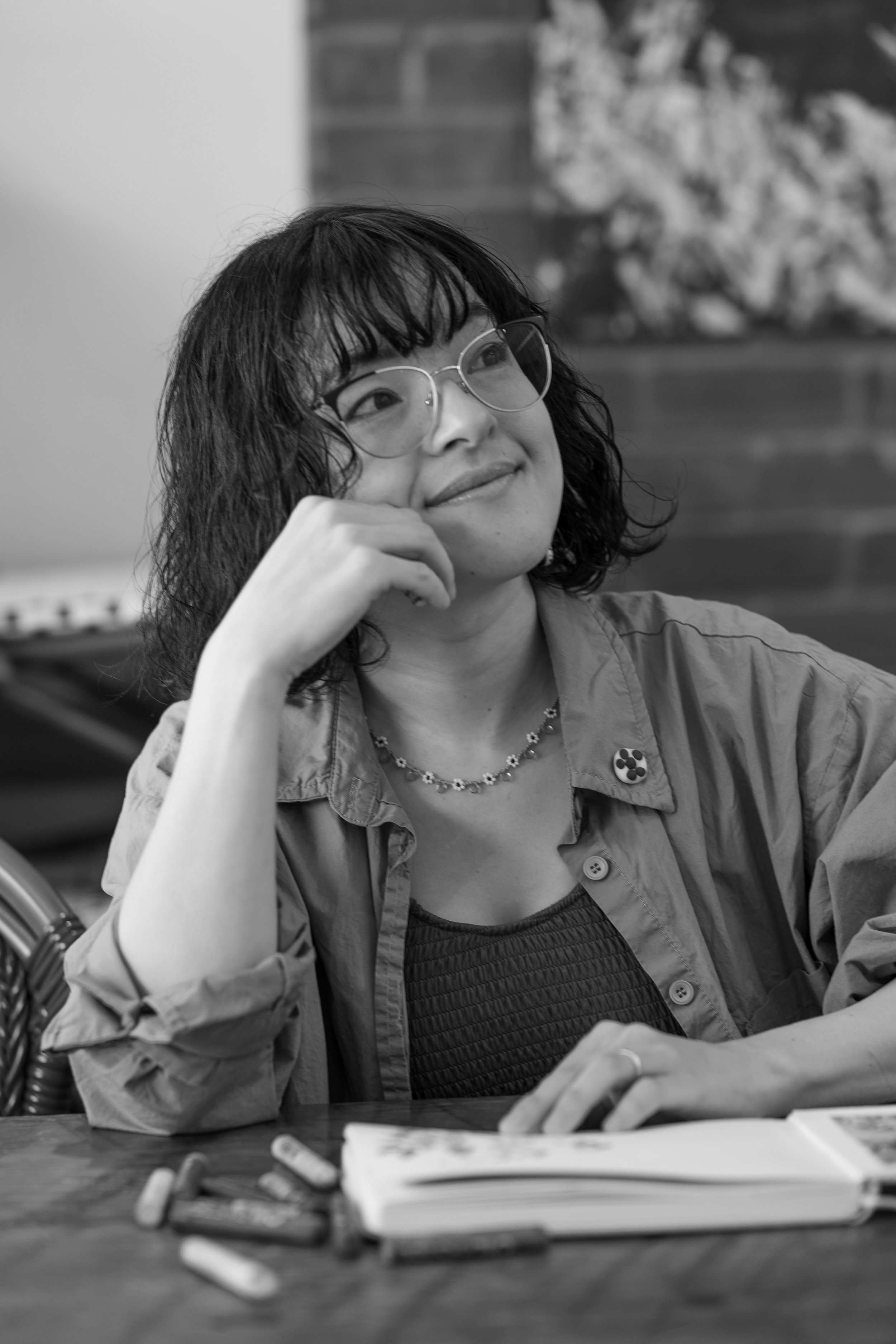
Chikako Ogawa.
CHIKAKO OGAWA is an artist living in Saskatoon. Born and raised in Japan, she moved to Canada in 2019 and settled in Saskatoon in 2024. Having moved many times, she believes home is more than a place — it’s a feeling. Through her art, she shares warm emotions and hopes to create a welcoming space where people of all cultures can be themselves, feel valued, and connect.
“people stories” shares articles from Folklore Magazine, a publication of the Saskatchewan History & Folklore Society. Click below to learn more about the Magazine and to find out how to get your story into the blog!