
Bridging History, Culture, Memory, and Family
This article was originally published in the Winter 2026 Edition of Folklore Magazine.
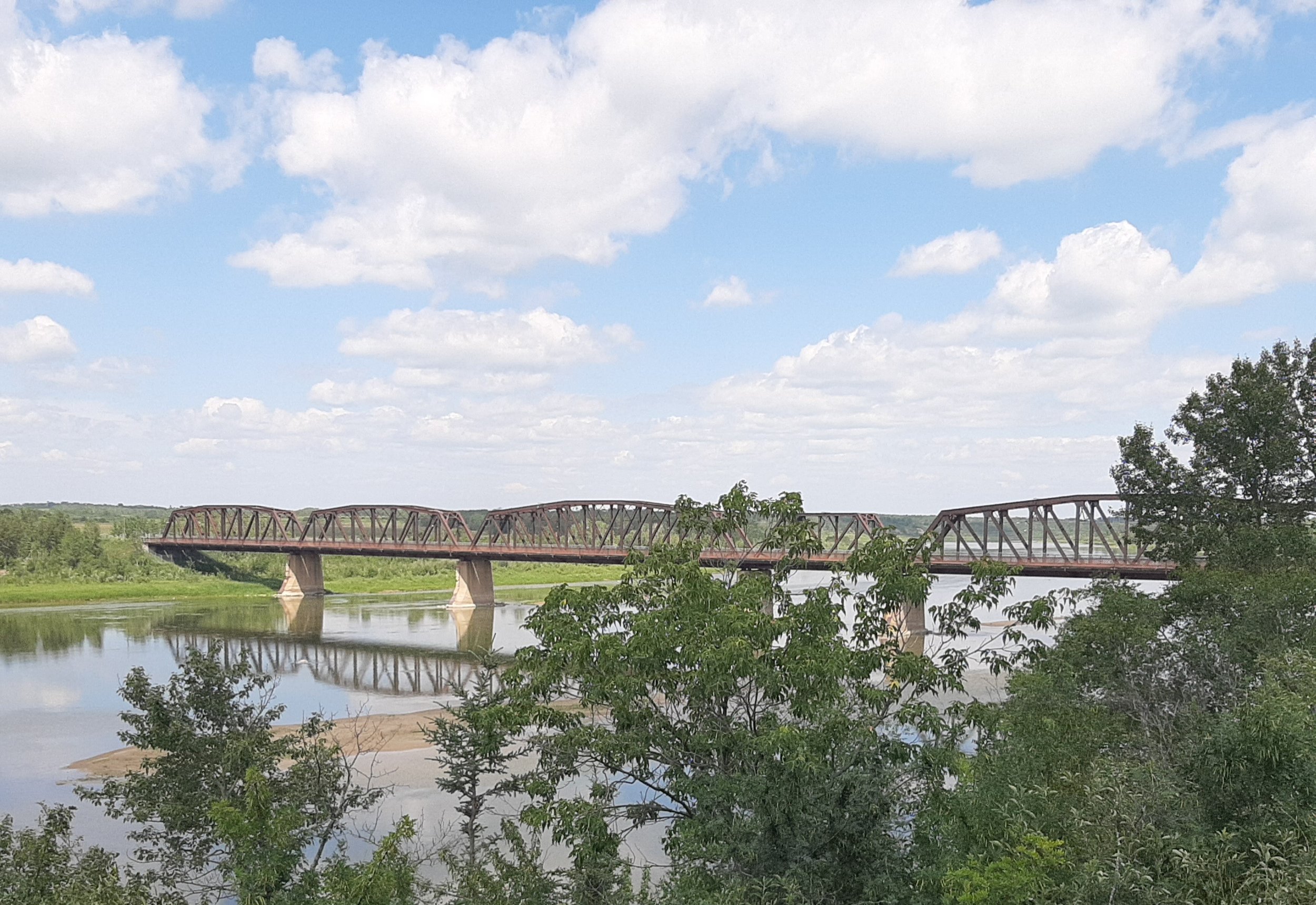
Photo of the St. Louis Bridge by Constance Sanche.
My story does not begin with me, or with my parents and grandparents. My roots reach into the past, across the Atlantic to Europe, back in time to the North American fur trade, back to the Red River Settlement and Resistance, through Western Canadian history to Batoche and the Northwest Resistance, back to early twentieth-century immigration, and back to a time before historical and genealogical records.
Stories layered on stories. Stories that bridge the past and the present; stories that bridge cultural differences and similarities; and stories of my family’s history. As I think of these stories and the idea of bridging, I visualize the St. Louis Bridge. That image connects my parents, who grew up fairly close to the South Saskatchewan River but on opposite sides of it: Mom southeast of St. Louis, and Dad northwest. My mom, of Norwegian ancestry, grew up on a farm near Hagen, only a few miles from St. Louis; my dad, of Métis, Scottish, and French ancestry, grew up on a farm across the river, northwest of St. Louis. Now in their eternal resting places, my parents are still separated by the river and connected by the St. Louis Bridge. Mom is buried with her parents at Saron Church, which is near her family home, and Dad is buried with his parents and near other extended family at St. Andrews in the Halcro district.
Both Saron and St. Andrews are municipal heritage properties. The first Saron Church was built in 1907, and the second, larger and more elaborate, was built in 1916. Saron is a heritage site as the first Norwegian Evangelical Lutheran church built in Saskatchewan. The cemetery is in the churchyard. It’s a quiet country setting bordered on two sides by trees and shrubs, and depending on the season and weather, it has gentle breezes, wildflowers in bloom, birdsong, butterflies, and dragonflies. A lovely final resting place for my mom.
St. Andrew’s Anglican Church and Cemetery is the third oldest organization in the Diocese of Saskatchewan. St. Andrew’s was established in 1878. The first church was consecrated in 1883, and the church on the site until about ten years ago was consecrated in 1903. The last time we visited Halcro Cemetery, fire had destroyed the church. All that remained was the fieldstone foundation, the bell, and a memorial kiosk. Dating back to about 1882, the cemetery is peaceful and picturesque, with its old monuments, mature plantings, old fruit trees, and views of the South Saskatchewan River. A lovely final resting place for my dad.
Like Saron and Halcro, the St. Louis Bridge, which crosses the South Saskatchewan River near the village of St. Louis, Saskatchewan, is a historical landmark. It was built by the Grand Trunk Pacific Railway in 1915. In 1928, traffic lanes were added on each side of the railway tracks. In 1983, they removed the railway tracks and resurfaced the railway deck to accommodate vehicular traffic. In 2014, after the new Highway 2 bridge was constructed, the historic St. Louis bridge was closed to all traffic.
When I visited St. Louis last summer, I was pleased to see how the local Historical Society has given the old bridge a new life as a tourist attraction. The wrought-iron gate at the bridge entrance, now open to foot traffic, celebrates the community's cultures and histories. The left panel portrays a Métis oxen cart, while the right shows a pioneer plowing the land. A large bison head on the center panel relates to the St. Louis Archeological Site, where researchers discovered the Antiquus Bison. Beyond the discovery of the bison, researchers uncovered evidence of continuous hunting and settlement dating back centuries, signs of Indigenous life in the area. The display creates a sense of interconnectedness among First Nations peoples who lived in the area for centuries, Métis people who settled on the river lots, and European immigrants who homesteaded there. I feel that interconnectedness; all three sections represent my cultural background and family history.
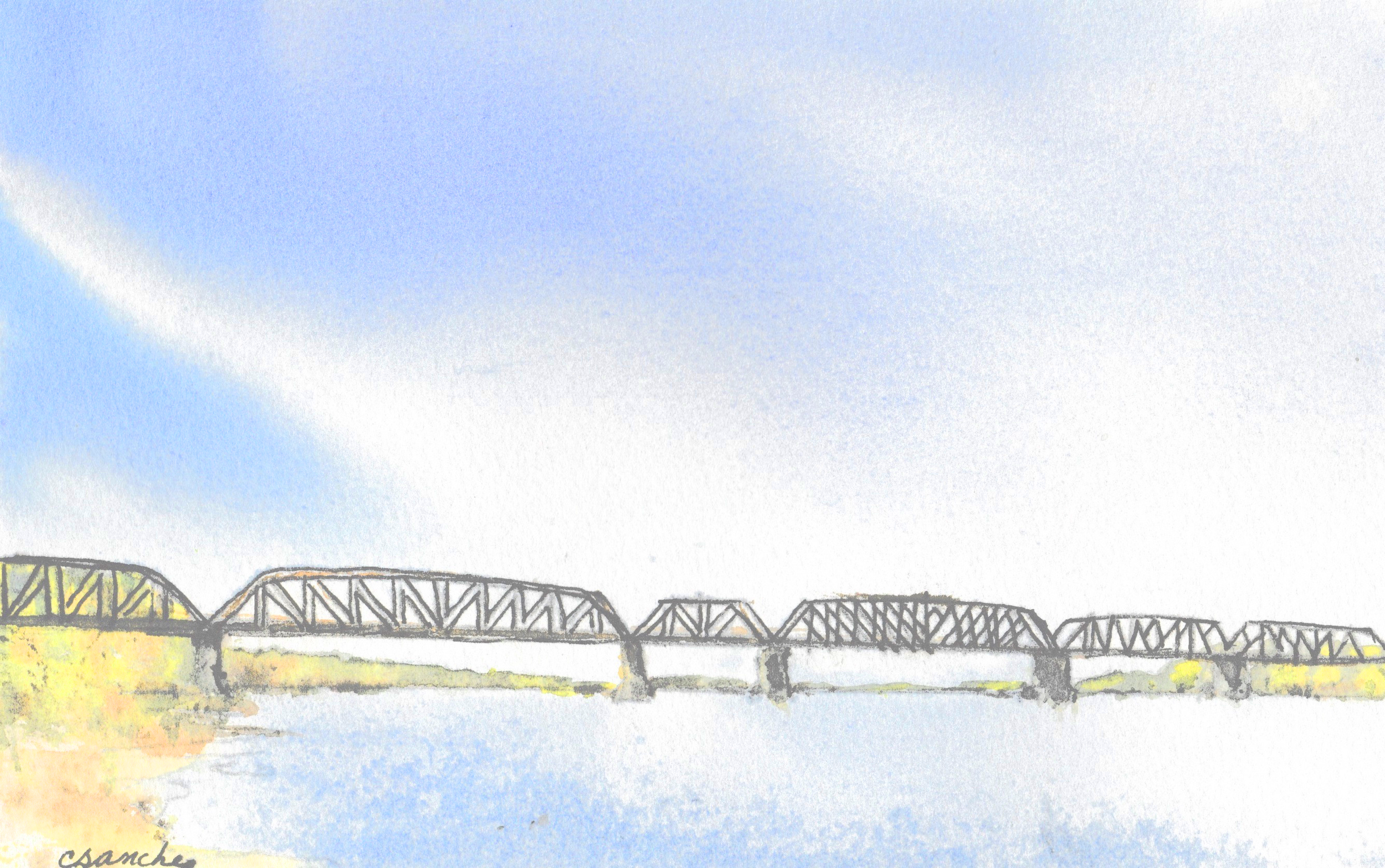
Watercolour painting of the St. Louis Bridge, Saskatchewan, by Constance Sanche.
Personally, this bridge is an important landmark connected to my childhood. As a child, I clearly remember the bridge signalling our arrival in St. Louis and that we were getting closer to relatives we were visiting on holidays. Perhaps because the area was home to both my parents, each visit felt like, and actually still feels like, a homecoming.
I remember that each summer we spent at least one day of Dad’s summer holidays fishing by the river. My dad loved fishing. Those were happy times with Mom, Dad, my brothers, and me, with a picnic lunch and fishing gear in the trunk as we drove to the river. On the way, we drove along a field road and stopped to catch grasshoppers for bait. Those were simpler times; Dad made his own fishing pole from willow and fishing line. Once it was all set up and secure in the sand, he tied a bell to the pole. Thinking back, I see Dad reclined with his right leg crossed over his left, his hands laced behind his head. While Dad waited for the fish to bite, Mom, my brothers, and I enjoyed the day of sand and sun.
Several years ago, I went fishing near Borden with my husband and son, and that day, while relaxing beside the river, I was reminded of those childhood summer days. Recently, while going through my journals, I came across a poem I wrote that day near the Borden Bridge. Today, as I read the lines, I’m back there, and as I remember and experience the two places as one, I long for summer and a day by the river. Perhaps, by sharing, I can take you there, too.
I remember fishing at the river
dampness, willow, clover,
fragrances that blend and blur
with river sounds of insects buzzing, birds squawking,
other insects humming, other birds calling
and willows that whisper
I remember fishing at the river
soothed by gently swishing water on shoreline rocks
sunlight dancing
a brilliant blue sky, fluffy white clouds floating past,
winged ones flying far away, shore birds near
fishing poles stuck in the sand
I remember fishing at the river
quiet peaceful family time
picnic lunch of sandwiches and cookies
comfort foods, tasty refreshments
water, Kool-Aid, a thermos of tea
seeking solace in our sharing
They fish at the river
enjoy warm sunshine, cool breezes
muddy sand between my toes, sunburnt nose
I too am here. I don’t fish.
I pick flowers and driftwood
gather thoughts and with plume in hand
compose poetry in the sand.
Another more recent memory is from our Edwardson/Hagen family reunion. We held it at the hall, but throughout the day, some of us found our way to the river not far from the bridge. Some fished, some took pictures, and some of us just enjoyed being together, content in our family connections and relationships. I imagine our Norwegian ancestors smiling.
My maternal ancestry goes back to Norway; both my grandparents immigrated to Canada. In 1910, when my grandfather Conrad Edwardson (originally spelled Edvardsen) was a young man, he and his brother came to Canada from Norway. He worked for the Lumber Company in Prince Albert and Big River until 1924, when he bought land in the Hagen district. In 1925, he married my grandmother, Dagmar Hagen. Dagmar was only eight years old when she came to Canada with her parents and siblings. They immigrated from Norway in 1904. When they arrived in Prince Albert, it was too late in the year to build a house, so they lived in tents through their first Saskatchewan winter. They eventually settled on a homestead in the Queen Maud district, which is north of Weldon.
My paternal ancestry reaches back to the British Isles, to France, and to an almost forgotten North American Indigenous heritage. My paternal grandfather was from the MacLeod Clan, and his mother’s family was from the Sutherland Clan. Surnames from Dad’s paternal lineage are Flett, Bird, Thomas, and Curtis, all names you’ll find in the Hudson’s Bay Company archives. I have three Indigenous grandmothers of this line. Sadly, the first is listed as “native slave.” The other two are listed as Margaret Cree and Sarah Cree. My paternal grandmother’s surname was Bremner, and her mother’s family were Ouellettes. Other surnames from Dad’s maternal lineage are Hogue, Dumont, Twatt, Taylor, Houle, and Laframboise. Some of these names are noted in the Hudson’s Bay archives, and some are connected to the buffalo hunt. My Indigenous grandmothers of this branch are Margaret Native, Jane Native, Angelique Assiniboine, Josephte Sarcee, and Josephte Assiniboine. The names of my Indigenous foremothers on both my dad’s maternal and paternal lines are names given to them by the colonizers; sadly, their traditional names are lost to history. I hope to prevent their memory from being erased by including them in this writing.
I appreciate how the three-part artistic display at the bridge entrance connects to and highlights my family history. First, I appreciate that the bison head was created to celebrate the St. Louis archeological dig, but for me, it also reminds me of my Métis ancestors, who were buffalo hunters. Second, I note that the plow was designed to represent the area’s French settlers; however, for me, it reminds me of my grandparents, Conrad and Dagmar Edwardson. They were Norwegian settlers who farmed in the nearby Hagen area. Third, the Métis ox cart carries stories of my great-great-grandparents William and Maria (Maggie) Bremner. In spring 1882, William, Maggie, and their children joined a caravan of other families leaving the Red River Settlement. In the community history book, I Remember: A History of St. Louis and Surrounding Area, it is recorded that “they rested on Sundays, Feast days, and rainy days and after fifty-six days arrived at their destination, a place they named Saint Louis de Langevin.” Every time I read it, I’m awe-struck by their story. Moreover, I’m proud of my great-great-grandmother, who, on that long journey, drove a yoke of oxen while her husband, William, attended to other duties. As I reflect, I connect to my cultural background and my ancestors. And I remember.
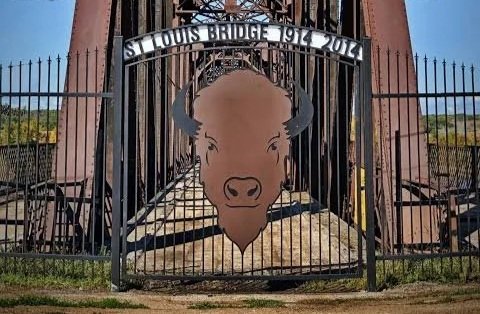
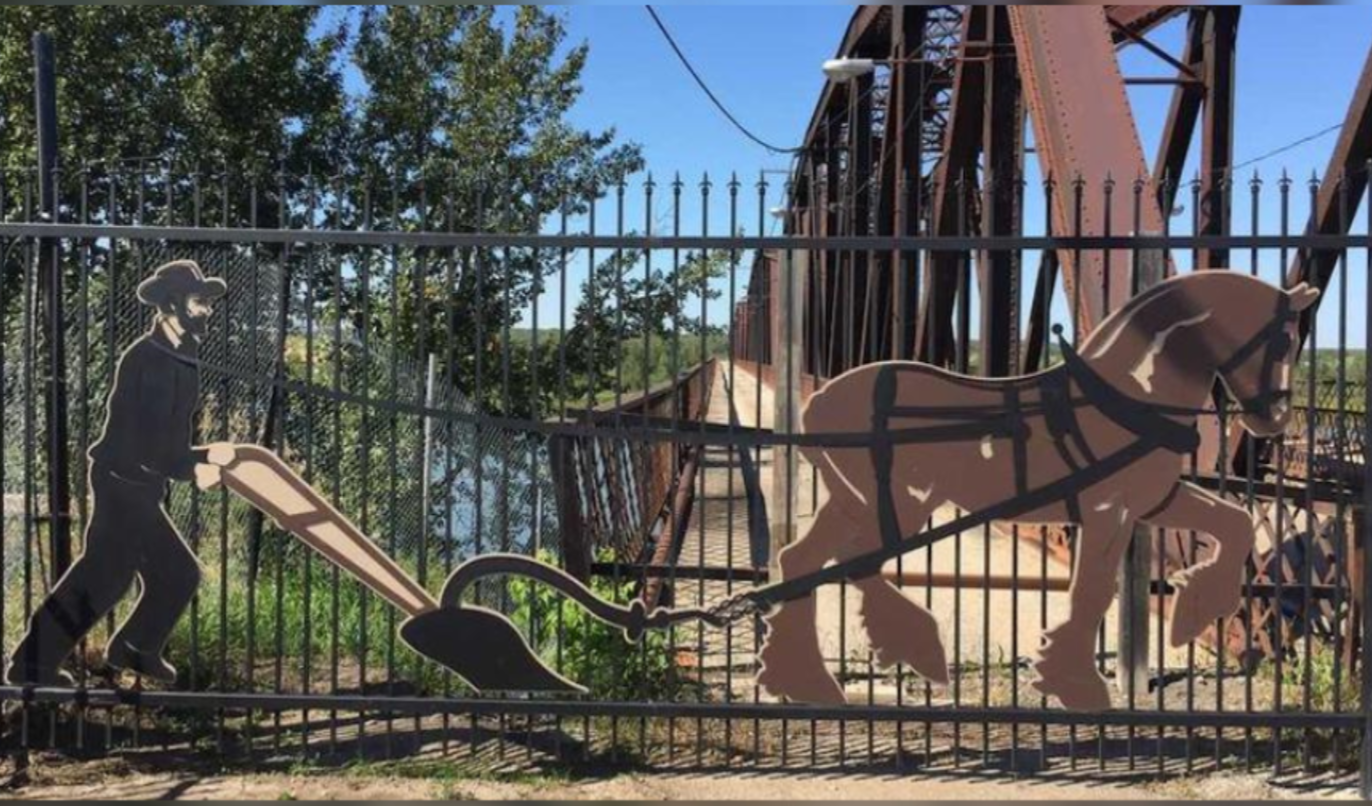
Photos: (Above, left) Picture of the bison monument at the St. Louis Bridge; (right) Picture of the settler and plow monument at the St. Louis Bridge. Both images are from the 980 CJME website.
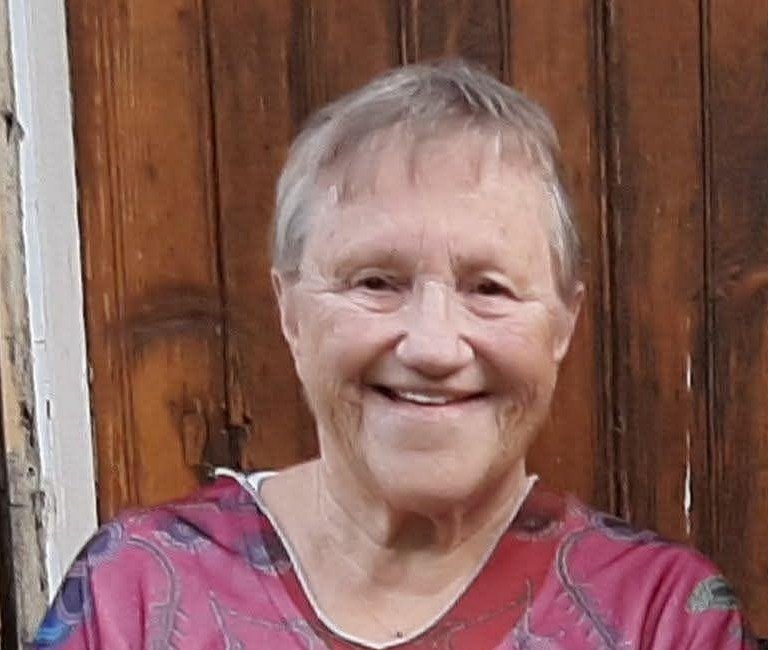
Constance Sanche.
CONSTANCE SANCHE was born and raised in small-town Saskatchewan and has lived most of her adult life in Saskatoon. After raising her family and working for several years, she followed her dream of attending university and in 2004 graduated with an Honours degree in English. She discovered her Métis ancestry around the same time, so she took every Indigenous literature class offered, along with Native Studies and Métis history classes. Constance is currently writing a memoir structured around her family history.
“people stories” shares articles from Folklore Magazine, a publication of the Saskatchewan History & Folklore Society. Click below to learn more about the Magazine and to find out how to get your story into the blog!