
“Cute Tomata” and a Mallory Hat: An Interview with Belinda Betker
Interviewers: SHFS Student Researcher Aydrian Alegría, and Kristin Enns-Kavanagh.
This article is part of our ongoing series on the history of clothing and dress in Saskatchewan. It was originally published in two parts in the June and September 2026 Editions of Folklore Magazine.
Aydrian Alegria: Well, thank you for joining us, we just finished signing the consents. So, just a reminder that if you'd like to pause or withdraw anything from the interview, just let us know.
Could you please just state your name for the recording?
BB: Belinda Betker.
AA: Great, and what year and where were you born?
BB: I was born June 17, 1957, in Yorkton, Saskatchewan.
AA: Could you tell us a little bit about yourself, please?
BB: I’m retired now from a career in health care. I’m a Saskatoon writer, specifically of poetry and haiku. I identify alternately as queer, lesbian, or dyke – I'm pretty comfortable with a lot of different terminology. I've been happily married to my wife, Beth, since 2010. We met in 2003, just a week after she came over to Canada from Australia to work in nursing for a year. Long story short, she's a dual citizen, and the quintessential light of my life!
AA: Great. And since we'll be talking a bit about some garments from your family, could you give us a brief overview of your family? Like, do you have any siblings, how many you have, that sort of thing.
BB: I grew up with my mom and dad and three brothers. I'm the oldest child and the only daughter in the family. The brother closest in age to me is a year younger; the next is two years younger; and the third is ten years younger than me.
AA: Great! We will be discussing some garments and accessories that you've inherited from your family. One of the pieces that you still have now is a blouse of your mother’s that you brought with you today. Could you describe it for us?
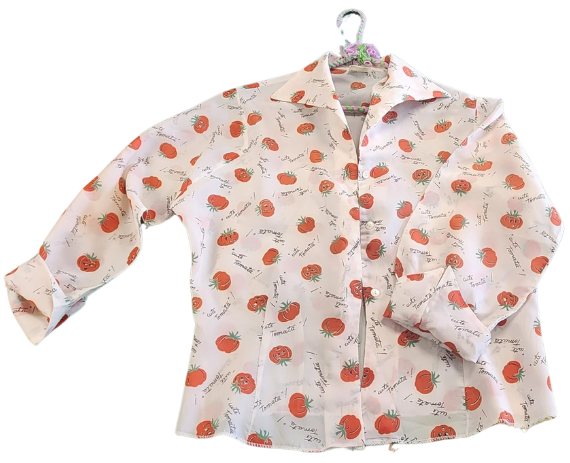
“Cute Tomata!” shirt.
BB: Mom’s blouse is very tiny. [laughs] She would have worn this probably in the mid-50s. I was born in '57, and I think she had this before I was born, so maybe it’s from her dating years, though I did find a 1957 photo of her wearing it. The inside collar tag says size four, and the brand is “Frank Kilroy.” There's another tag that says “Dacron,” which is a type of polyester. The blouse is a cream colour, with pearl-shaded buttons, and really cool pointed turn-back cuffs.
What's even cooler is the blouse is printed with random cartoonish tomatoes with faces on them. The faces have little winking eyes, long eyelashes, and different mouth expressions. Also, all over the blouse in various places, it says “cute tomata!” – not tomato, but tomata, with an exclamation mark. The faces and phrases are scattered at various angles all over the blouse. I know this blouse was a favourite of my mom's, but I don’t remember ever seeing her wear it –whether she did so while looking after three babies or not, I don't know.
AA: Was it a unique piece of her wardrobe, or what was her usual sense of style like?
BB: She liked being well dressed – not super over-the-top, but she was fashion-conscious, liked clothes, and had a great sense of style. She didn't like to wear things over and over too much. She had a selection of ‘good clothes’ for special occasions, and she enjoyed going out.
AA: What made you want to keep this piece?
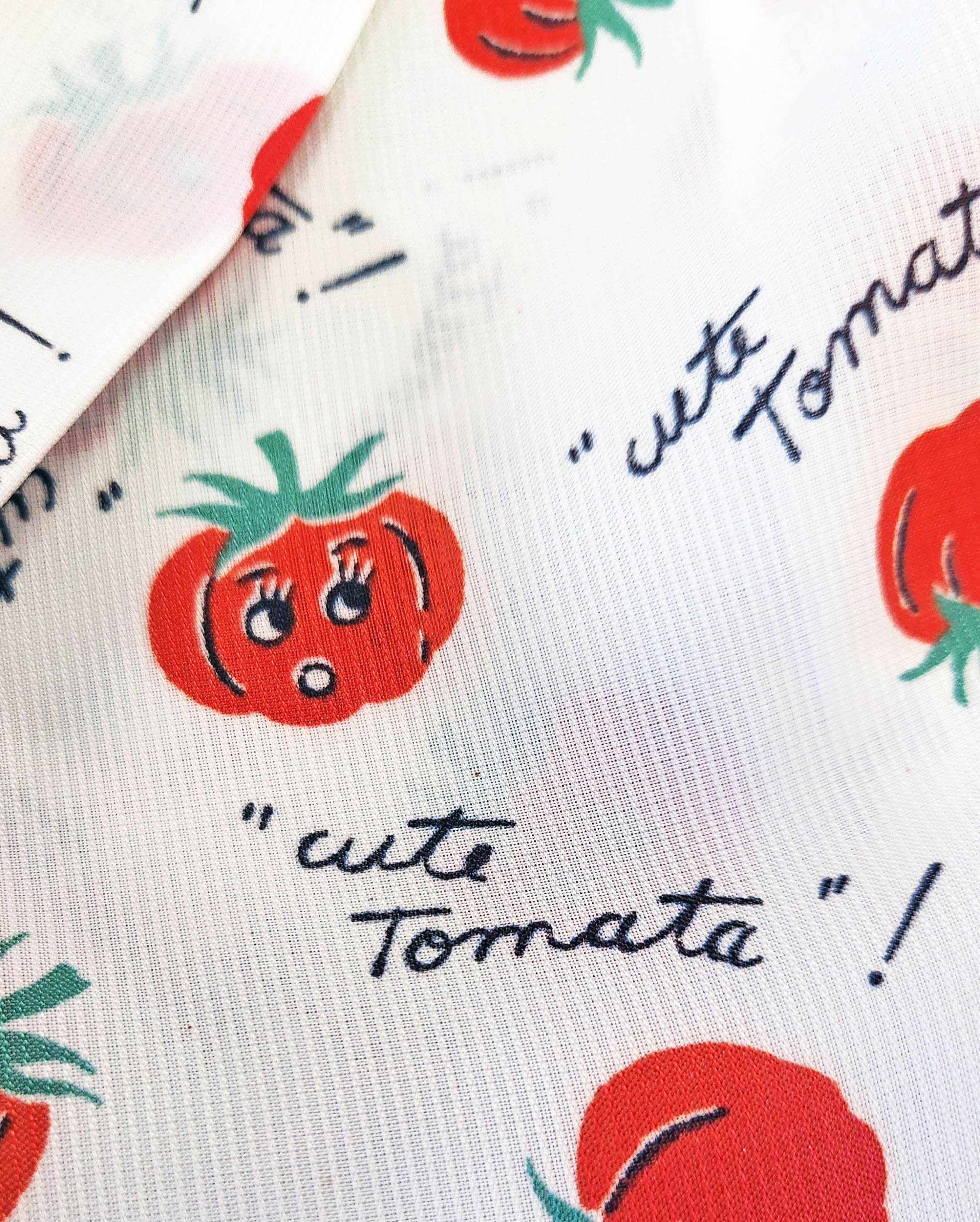
Close-up of the "Cute Tomata!" pattern.
BB: I’ve kept it now for many decades because it was a favourite of hers, and I’m also sentimental about it. When I was little, I thought it was kind of funny to be a “cute tomata!” It's cool to think of the person my mom was when she would have been wearing that, and it's just so tiny looking!
[they laugh]
AA: It's very cute. It’s very lively, and lots of personality!
BB: Yes, and it's not something I can imagine too many women would have worn. I mean, would it have been considered to be bragging to wear a blouse that said “cute tomata?” Or did she just think it was a cute design? I wish I could ask her now, but she passed away several years ago.
AA: Do you have any other pieces of clothing of hers? Or is this kind of the main thing you have?
BB: When she was downsizing her house to move into a senior’s independent living complex, we moved many of her favourite clothes from over the years into her new suite because she had lots of closet space to keep them in. The rest of her ‘old favourites’ she asked me to donate to charity for her, but when my wife's niece, nephew and nephew's girlfriend came over from Australia to visit us, I asked our niece, who likes retro clothes, if she was interested in anything of Mom’s. She was, and she was just the right size to fit some of the clothes, so we had Mom come over for Esther to model them in a mini fashion show. Mom was thrilled that Esther took some of those clothes back to Australia with her.
When Mom passed away, I became very sentimental about the rest of her clothes, and I kept them for several years myself. But I finally donated them to charity, as she would’ve liked me to do.
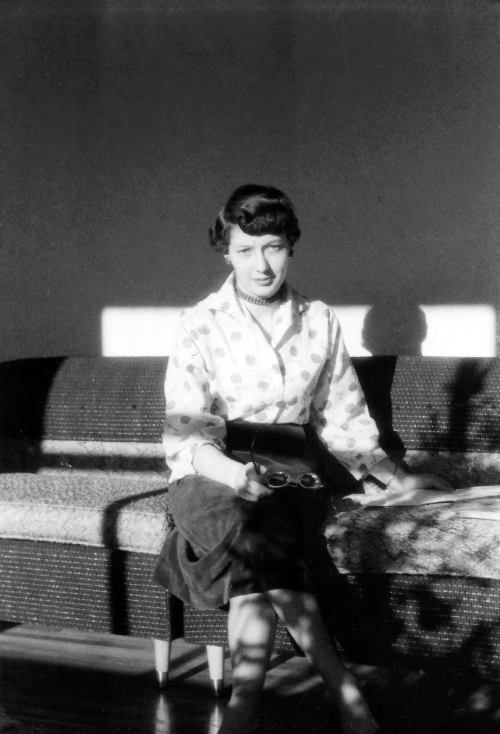
Belinda’s mother, Lorine Dorothy Betker (nee Schaan), 1957. She is wearing the “Cute Tomata” shirt.
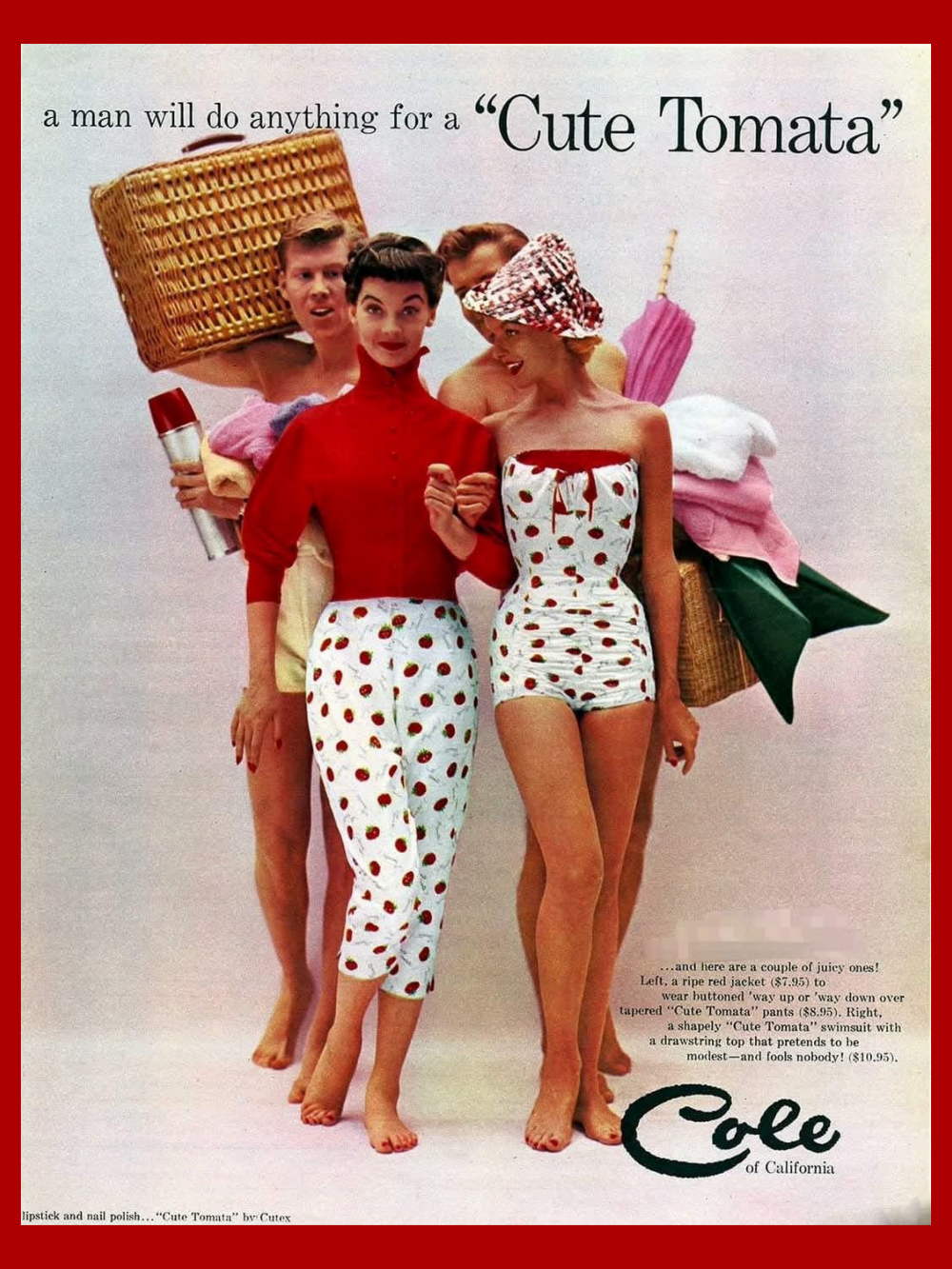
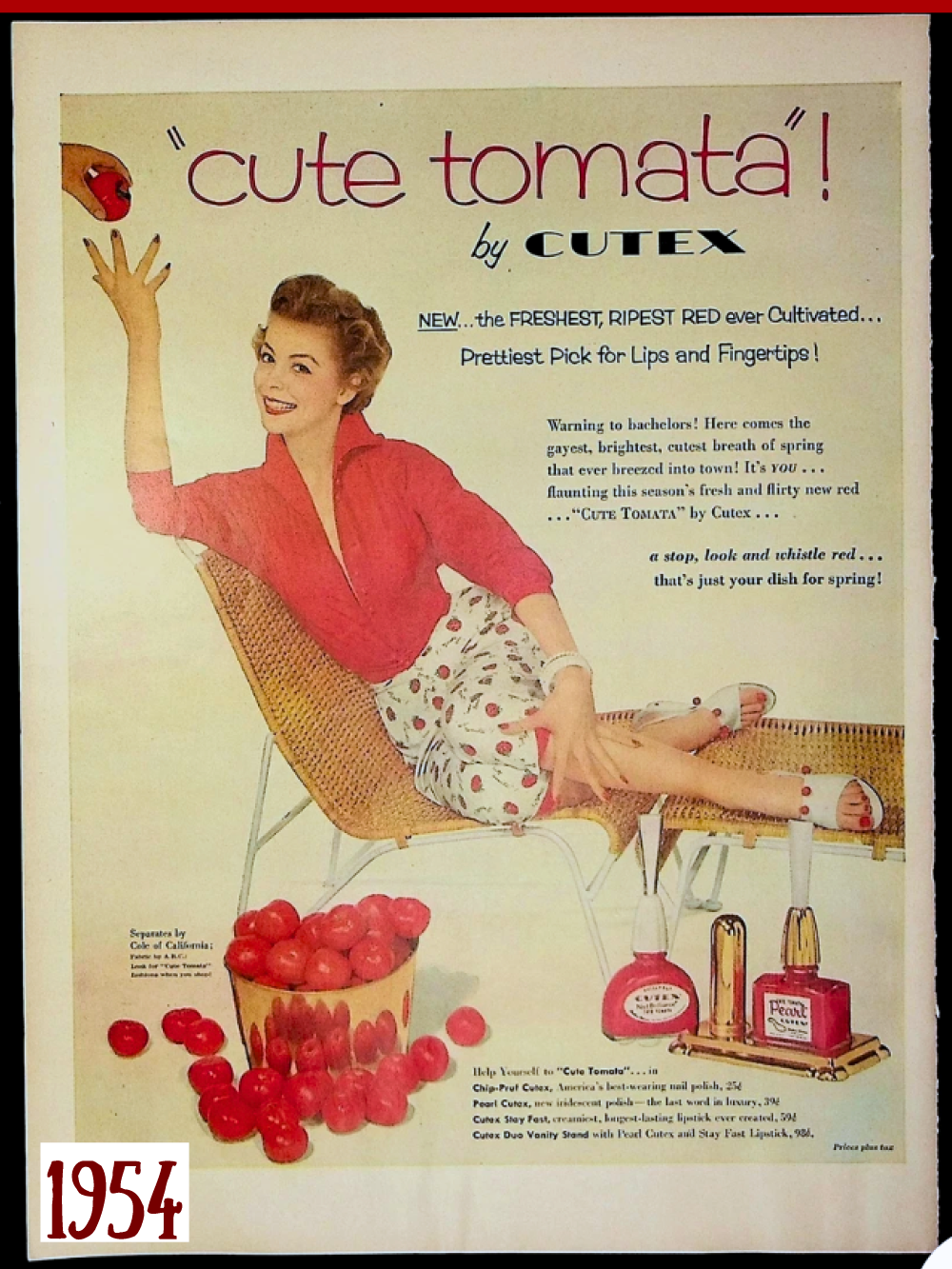
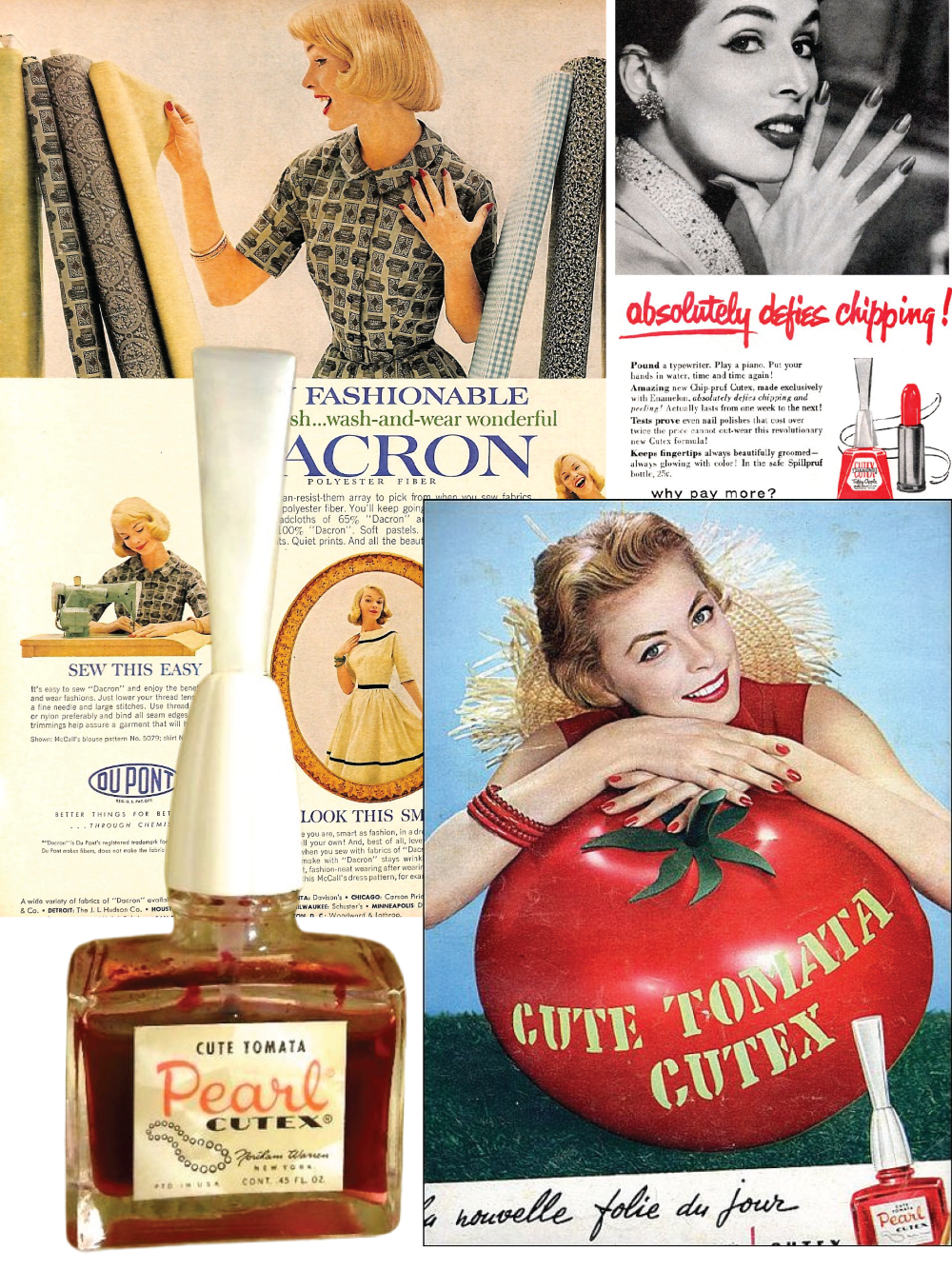
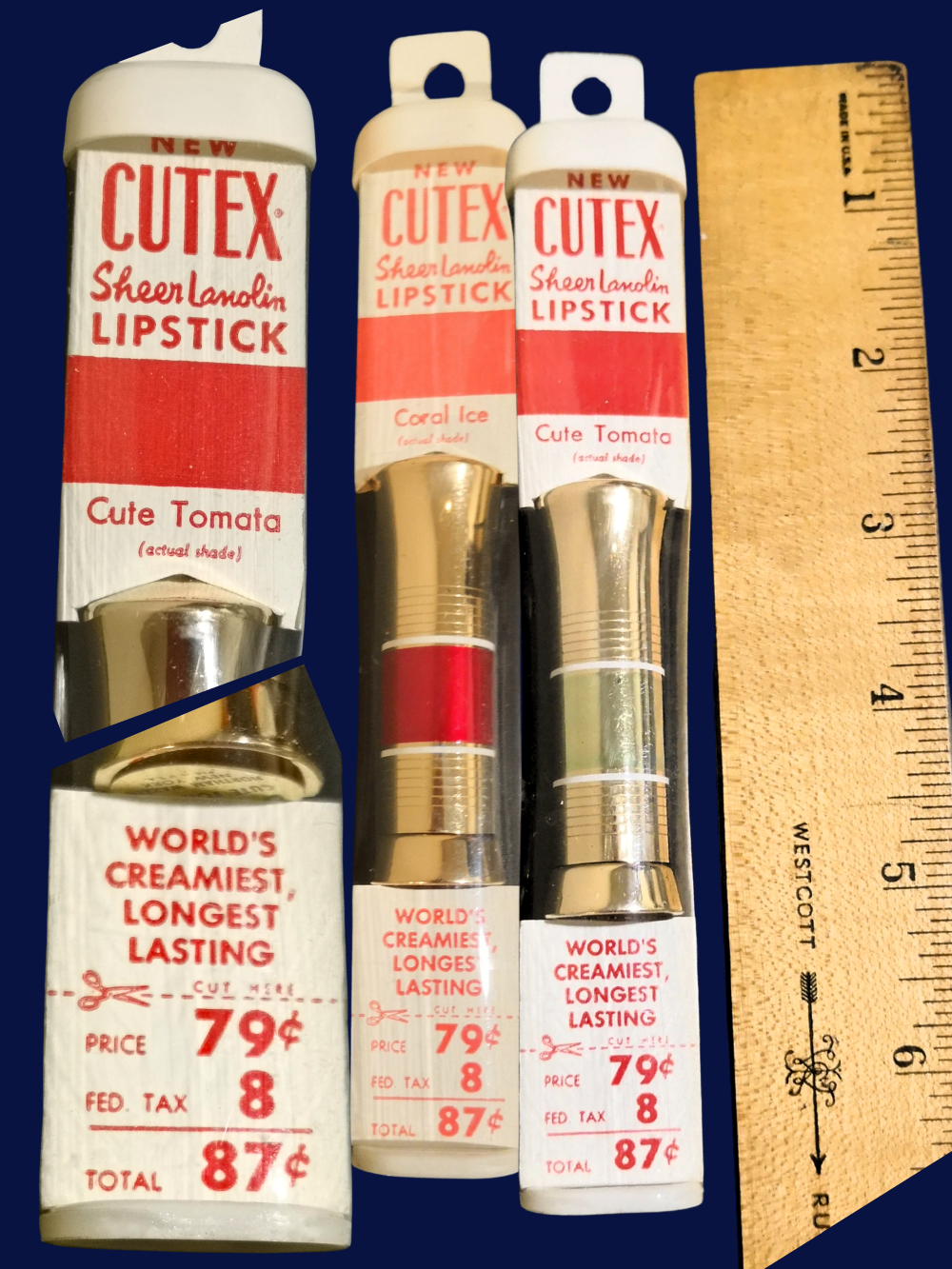
Editor’s note: Aydrian did some research and found that Cute Tomata was lipstick/nail polish combo made by Cutex in the 1950s.
It was marketed with various items of clothing in the tomato-print fabric. Tomato/Tomata was slang in the 1920s for a beautiful and somewhat ditzy young woman. But by the 50s, the term was reclaimed to mean a woman who was confident, liked to have fun, and took pride in her appearance. We think the Cute Tomata campaign was a response to a cheeky new generation of women who decided to embrace being a “tomata” and not be shamed for being too sexy!
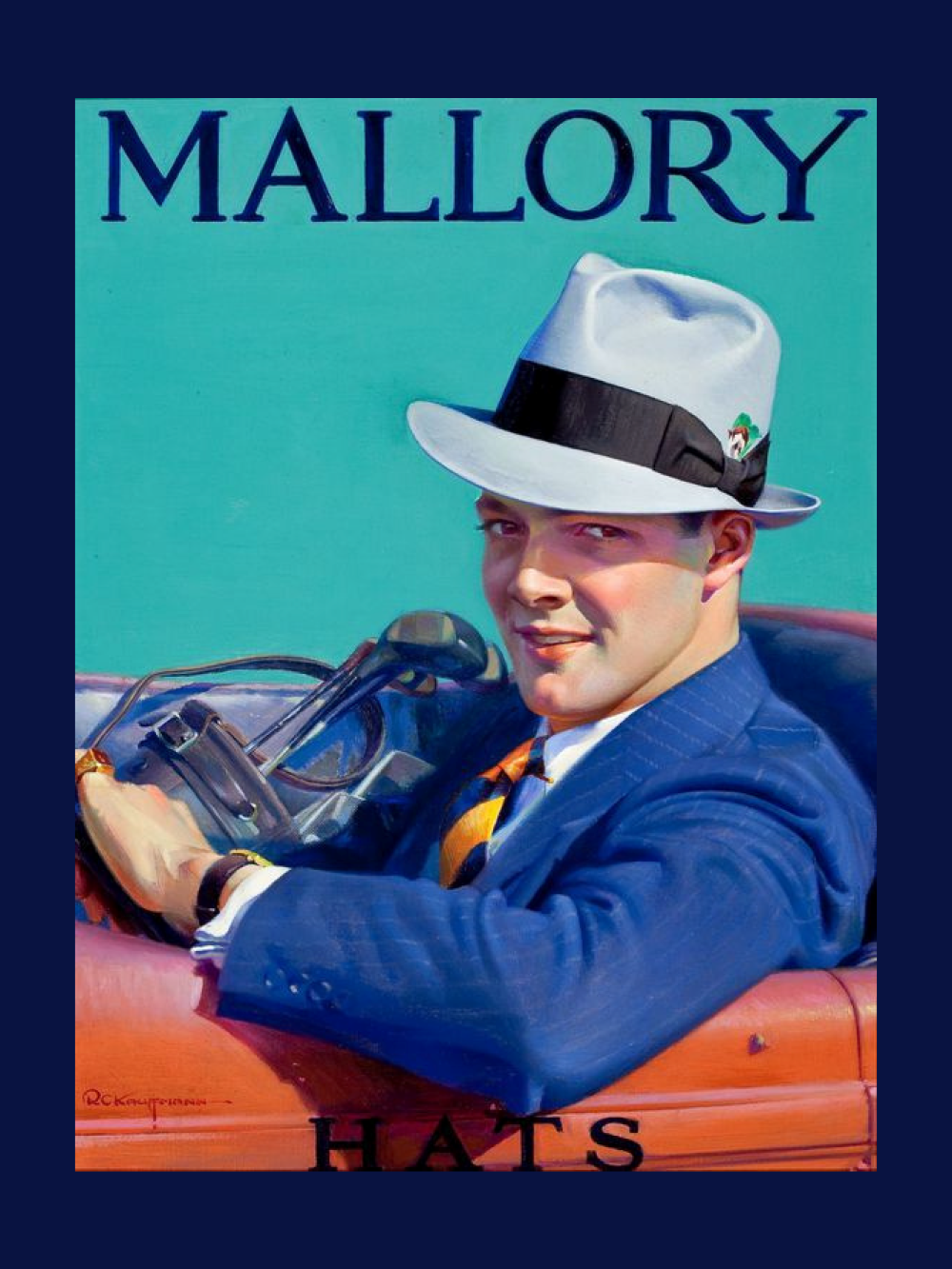
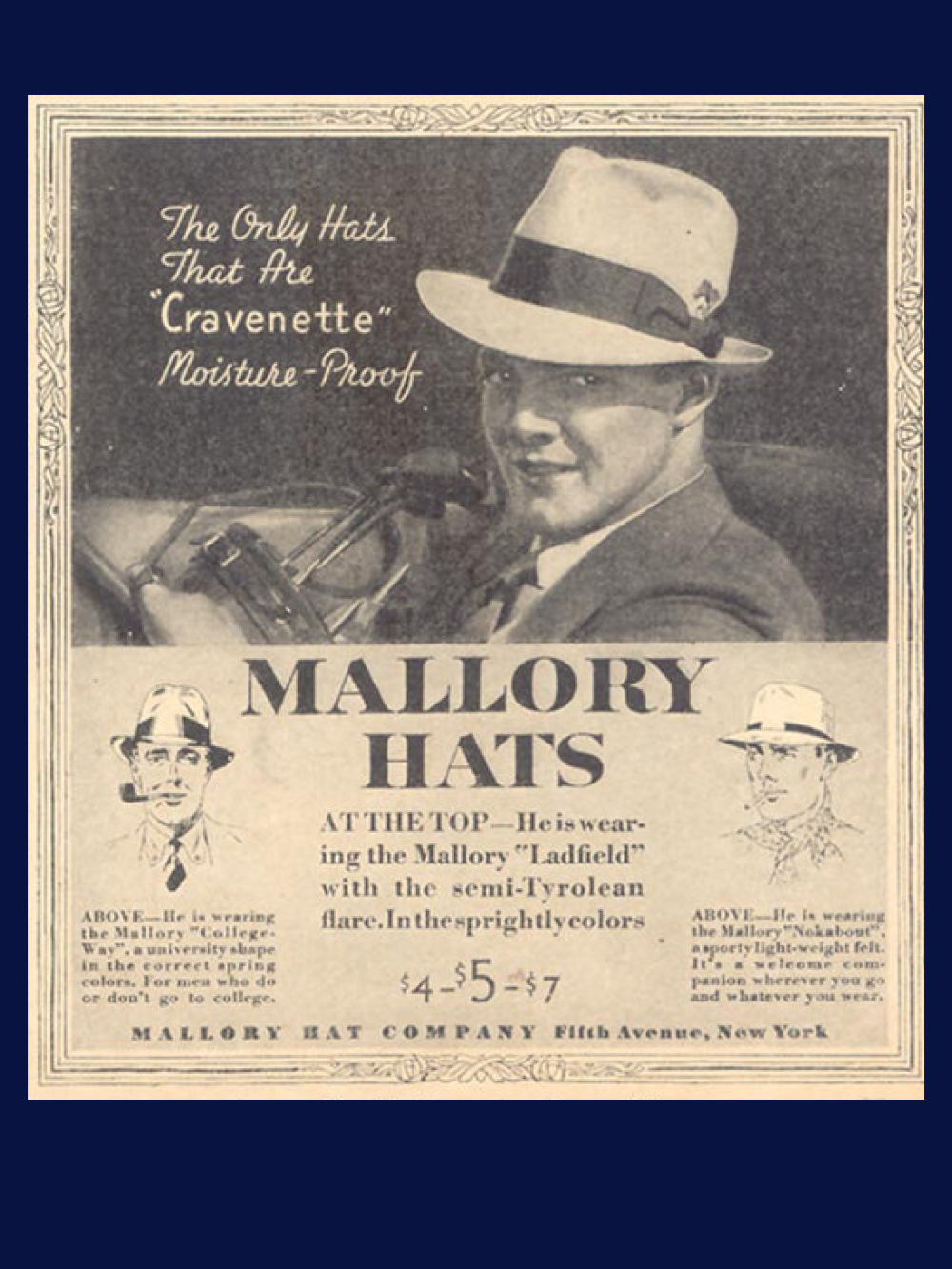
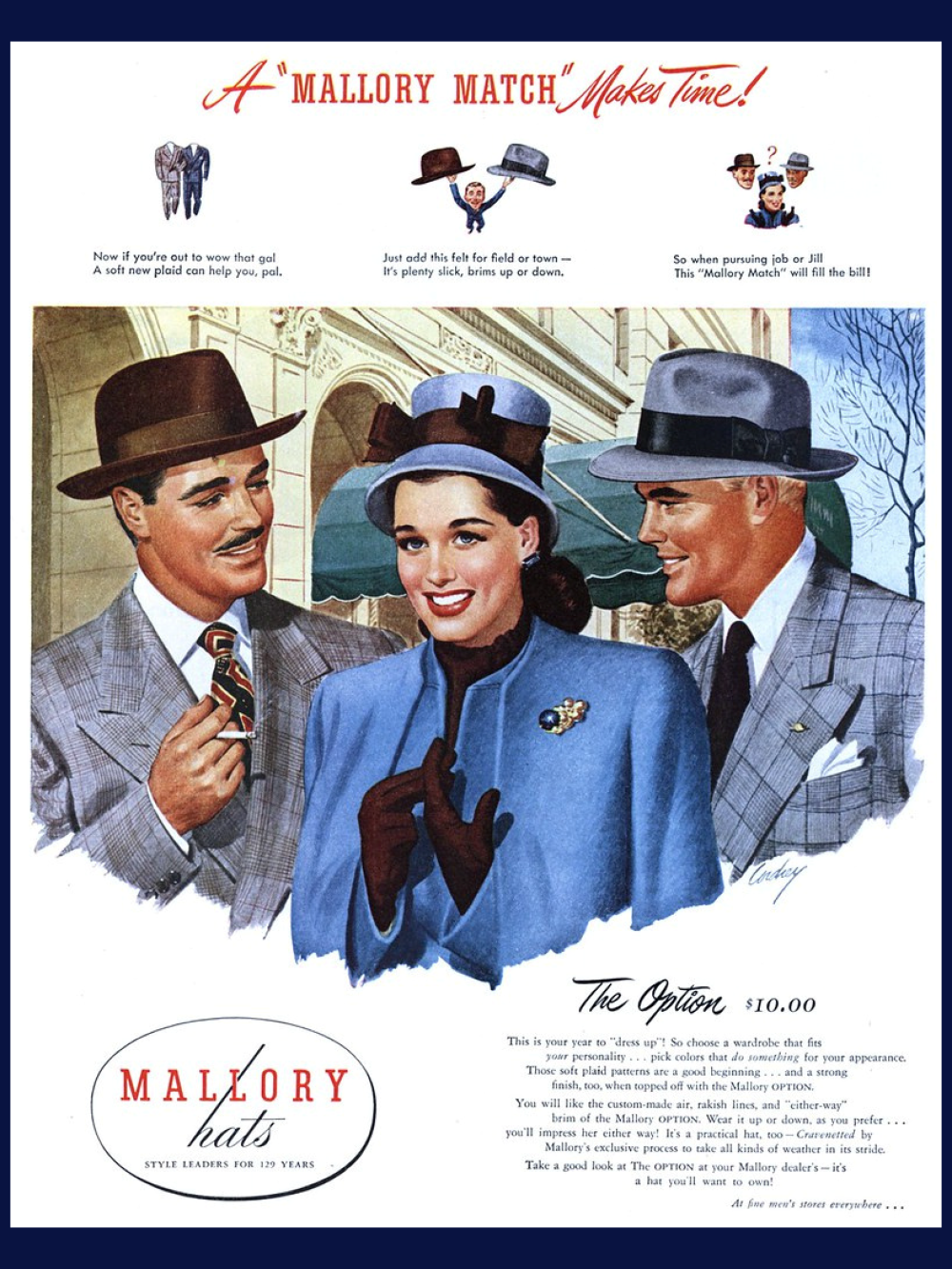
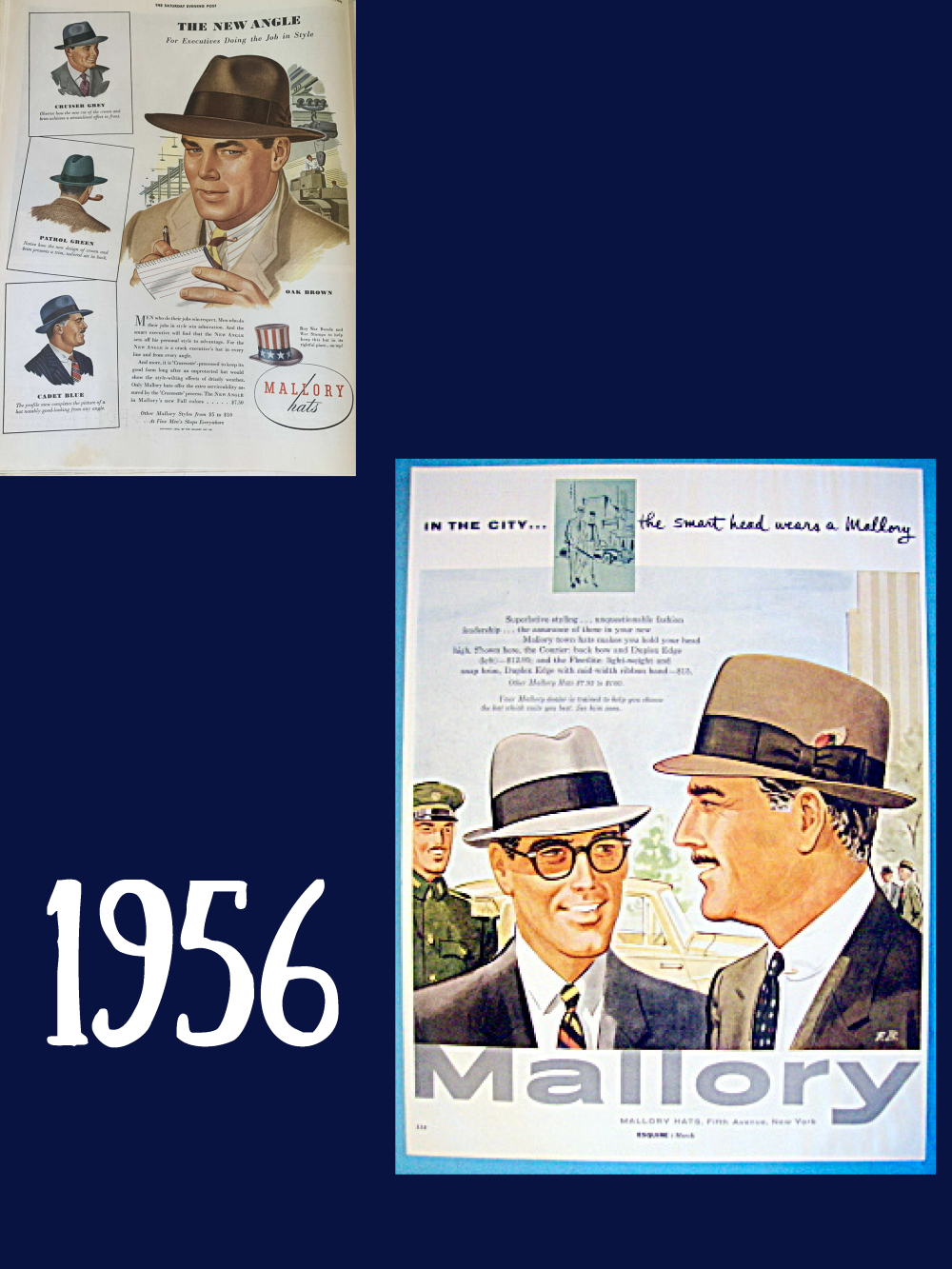
Mallory hats (below) were the first hatmakers in the US and the inventors of the fedora. The hats were made in New York around this time.
AA: Another piece that you talked about inheriting was a ring that you have, I think both your parents had worn. Is that right?
BB: Yes, originally, it was dad's diamond ring in yellow gold, but when he passed away many decades ago, Mom had it resized to fit her. When Mom passed away, I had the diamond reset into a new design in white gold, and now I wear the ring every day.
AA: It’s beautiful.
BB: Thank you. I love it a lot.
AA: So, it first belonged to your dad. When did you first find out about the ring?
BB: I'd been trying to remember when Dad would have gotten it, and it wasn't until I looked back at some family pictures that I realized he’d had it for longer than I thought. I think either Mom bought it for him for a special occasion, or he bought it for himself, maybe for his 50th birthday.
AA: Do you remember him wearing the ring?
BB: Yes, but I think it would’ve just been for special occasions. Maybe he started wearing it every day after he retired? I wish I remembered, but I don't.
AA: How does it feel to be able to wear it every day for yourself now?
BB: Well, I just love it. It’s special that it was my dad's, and then my mom's, and now it’s mine. I call it my family ring, even though it’s a different meaning than what a family ring usually is.
AA: You also brought your dad's hat? Is it in this box?
BB: Yes, and there are a few other things in this hat box too.
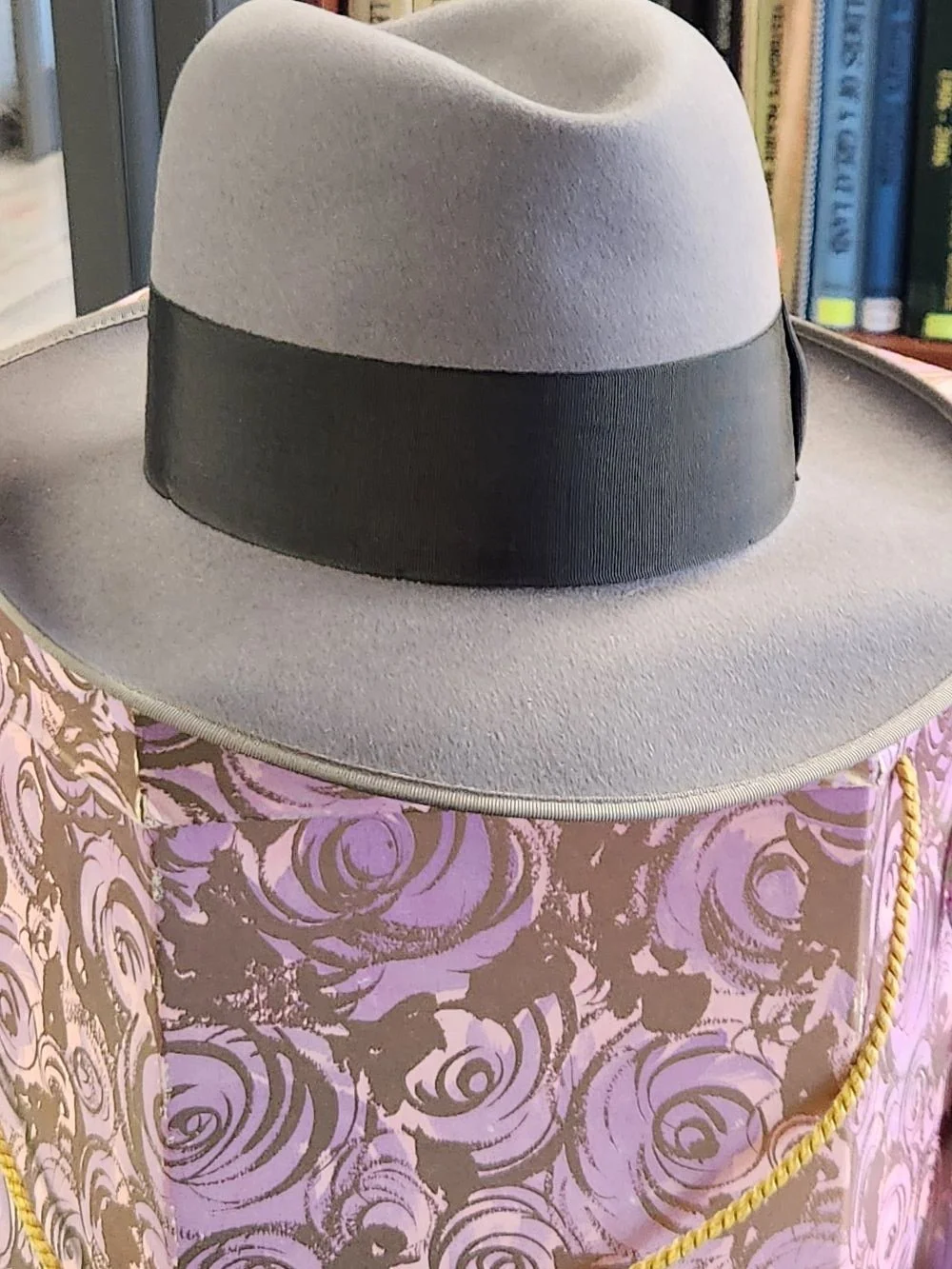
Wig box with hat on top.
AA: It’s a very lovely box!
BB: Yes, and I didn't notice until just now, that on the inside it's actually got mom's name and the address of where I grew up. Oh, this is funny – this memory just came to me – this would have been her wig box. There was a time in the late ‘60’s or early ‘70s when Mom had a fashion wig. She was dark-haired, but her wig was blonde. She really didn’t like wearing it, and rarely did. I have no idea what ever happened to it.
So, yes, this would have been her wig box, and the wig would have been on a mannequin head.
AA: Oh, yes, inside it. It’s a very beautiful violet floral rose box.
BB: Yes, it's a very feminine box. It’s been up high in my closet for quite a few years, and when I got it down today, knowing Dad’s hat was in it, I was surprised to also find a woman’s hat inside that I don’t remember Mom wearing.
AA: It says, “Made for Eaton’s. Great Britain, made in England.”
BB: Wow – proof that my mom liked good quality, as did my dad.
AA: It’s a beautiful, red wool, sort-of…
BB: Women’s fedora?
AA: Yeah, like a women’s fedora.
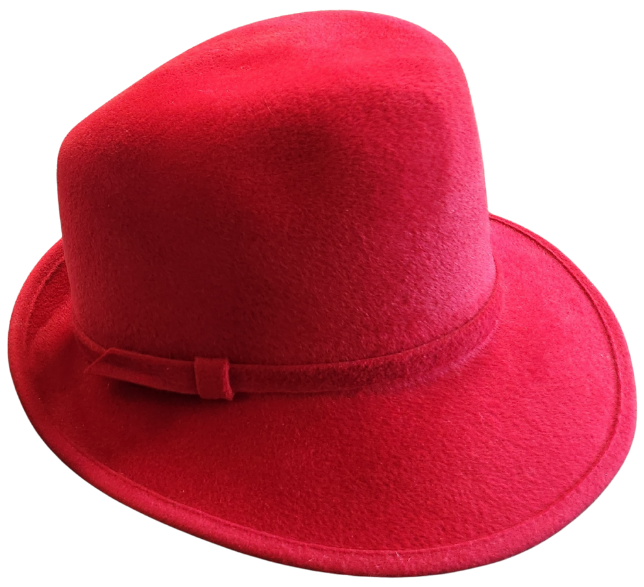
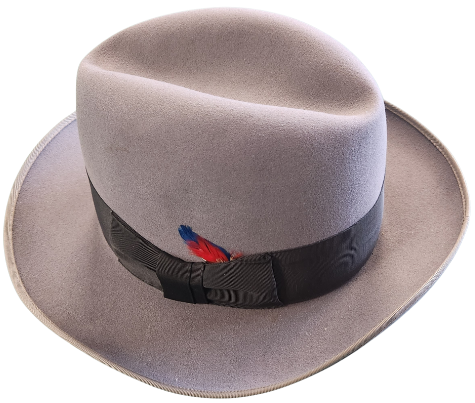
BB: It's beautiful, but I don't remember her ever wearing it. She probably gave it to me when she gave me dad's hat.
AA: It matches with the “cute tomata!”
BB: Yes – bright red was one of her colours. I don't know if you remember back in the ‘80s when you could ‘get your colours done’?
AA: Yes, colour analysis?
BB: Yes – you’d go to a colour analyst and answer a lot of questions and hold up different large swatches of cloth under your chin to determine what ‘season’ you were. Mom and I had the same skin tone, so we were ‘winters’ and could wear the same colours. Maybe she thought she might wear that red hat someday, but she didn’t really like hats any more than she did the wig, so if she ever wore the hat, I don’t remember it. I’m not really a ‘hat person’ either, so I don't know if I'll ever wear it.
Dad's hat is a tiny bit worse for wear, but he would have bought this in the ‘50s. It's gray wool, with a leather band inside. The size is 7/8, and the tag inside reads ‘Poulter's menswear, Yorkton, Saskatchewan’. There’s another tag that reads ‘shower-repellent processed’. Lastly, the inside of it reads, “Mallory, ‘for youthful smartness,’ Mallory 10, established 1817” with a gold beaver insignia above it.
AA: It’s very beautiful, the silk lining in it.
BB: Yes, it's a pretty spiffy hat, for sure.
AA: What's on the band on the outside, it's like a black ribbon?
BB: A black ribbon that’s tied into a kind of flat bow, but not a feminine bow at all. There's a word for what this thing is called…
AA: Is it Grosgrain? Oh well, like the hat band, but I'm thinking the texture on it is—
BB: Right, yes, grosgrain is the name. It's a lightly rib-textured hatband, and there are three little feathers tucked into it very jauntily. There's a bright blue feather, and over top of that, a smaller bright red feather, and underneath that, mostly under the hat band, is a very small yellow feather.
AA: It's very stylish!
BB: Yes, a very stylish snap-brim fedora.
AA: And so, when did you first find out about the hat?
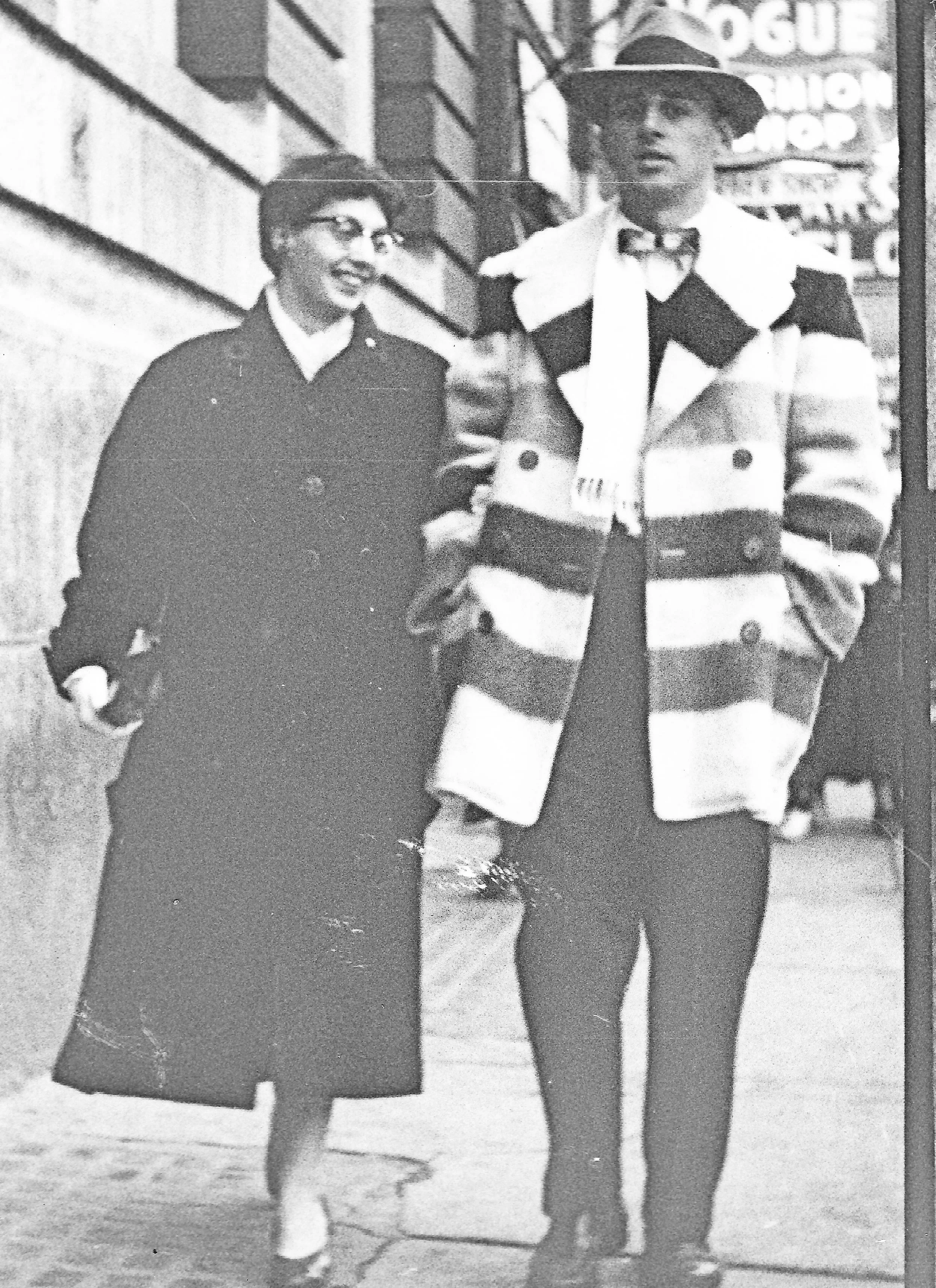
Lorine and Percy Betker, Saskatoon 1955.
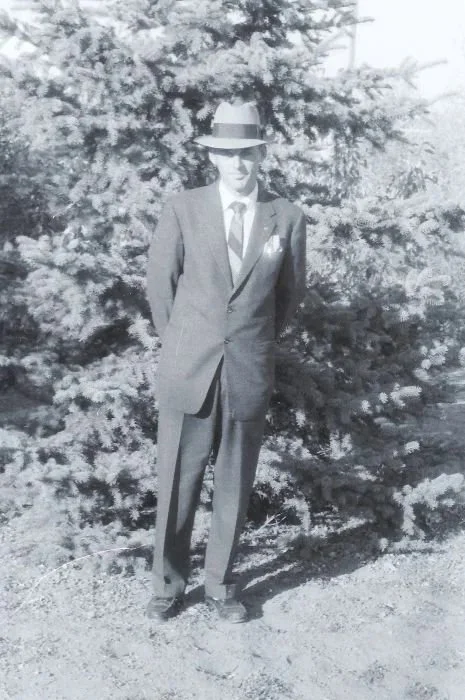
BB: I remember a black-and-white picture of mom and dad from back in the ‘50s, when there were street photographers who would take your picture and then, I assume, ask you to buy it. I'm not sure what the process was. So, I’ve got this great picture of mom and dad, where dad is wearing a suit, this hat, a Hudson’s Bay jacket, and a white silk scarf. Dad liked to dress up for special occasions and for going out. Mom was dressed up too, in a dress, high heels, and a full-length coat. They were a sharp-looking couple. I'm assuming it was a city street in Yorkton.
This is the first image I have in my mind of dad in this hat. I don't actually remember him wearing it, but I'm sure he must have worn it through the ’50s. I think maybe women and men probably stopped wearing hats in the mid ‘60s?
AA: So you don't remember him wearing the hat? When did you see the hat again?
BB: No, I don’t remember him wearing it. When I visited Mom one day at her home, probably around 2002, and finally told her that I performed ‘male drag’, and explained what that meant, and what I wore, and how I presented myself as a male drag king, she said, “Well, just a minute!” She got up and came back with dad's hat and said, “If this fits you, maybe you would like to wear it?”
I'd forgotten about the hat until I saw it, and then I remembered the street photography picture. I tried the hat on, and it fit perfectly. I said, “I would definitely wear this hat.” And so, I did, and it was my favourite ‘look’ for drag. I took incredible care of the hat and always knew where it was if it wasn't actually on my head. There was no way I was taking a chance on this hat going missing!
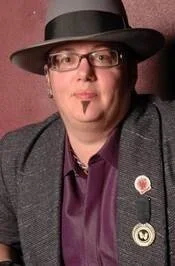
Dyke van Dick. Photo credit to Debra Marshall Photography.
AA: Did you feel a connection to him when you wore it in your performances? Did he ever know that you did drag?
BB: Well, Dad died when I was thirty, decades before I ever started doing drag. I don’t think he would have understood the whole ‘drag thing’, and so I'm not sure he would have been on board with it.
But as to feeling personally connected, I always told people it was my dad's hat. I was proud to wear it, but I didn't feel like I was emulating my dad, and I didn't feel any kind of psychic connection when I put it on. It's just that I felt a special fondness that it was dad's hat, and now I was wearing it.
A few years ago, one of my brothers asked to see the hat as he thought he might like to wear it. I hadn’t worn it since I quit doing drag, so I brought it out for him to try, thinking that if it fit him, he could have it now, and it would be great to still ‘keep it in the family’. But it didn’t fit him, so I still have it. When my mom first gave it to me, she had said my other brothers had tried it on, and it didn't fit them either. It’s kind of funny that my head size was the same as my dad's back in the ‘50s.
AA: Thinking about your drag persona, was he a character that you had built before you had the hat, because you already had started doing drag?
BB: Yes, I had started doing drag several years before I got my dad’s hat. Until then, I hadn’t thought of my character as being a dapper dresser performing ‘50s songs and jazz standards. When I first started doing drag, I wore a plaid shirt, carpenter jeans, and a ball cap – typical Western prairie guy clothing.
AA: And so did your style begin to change in drag after getting the dapper hat?
BB: Well, the hat expanded my repertoire of characters. It depended on what song I chose to perform as to what character I now wanted to present myself as. Many of the songs I performed were perfect for the ballcap-wearing, plaid-shirted, jean-wearing guy. But there were also older jazzy numbers or Michael Bublé songs I liked that were appropriate for wearing a shirt and tie, so it was a great opportunity now to sometimes wear a men's suit with my dad’s snap brim hat. So then, at any drag show, I might perform one or two numbers in a suit and dad’s hat, and I might do another number or two in the plaid.
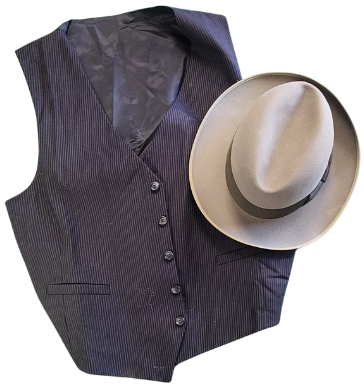
Vest and Hat.
AA: So could you tell us a bit about the different—I'm not sure if you’d use the word persona or character for describing the differently named drag king performances that you've done, but could you tell us a bit about that?
BB: I think persona is a good enough word. So, whether I wore plaid or a suit, my name was Dyke Van Dick; but if I was doing feminine gay male drag, my name was Cass Butchity. As Cass, I’d act quite flamboyant and wear colourful scarves and feminized clothing, but would never wear a cap, hat, or head covering. Cass didn't ‘come out’ very often unless he fit with the song or performance I was doing.
AA: How did you come up with the name?
BB: It was actually my friend Pete who came up with both names. He used to come up to visit from Regina, and we’d spend many weekend nights at Divas Club, just having a good time dancing and watching drag shows. There were a few drag kings who also performed occasionally, and eventually I started to think that ‘doing drag’ myself might be really fun someday.
One night, Pete and I were brainstorming about what my drag name could be, and one name he came up with was ‘Dyke van Dick.’ I immediately loved the switch on the actor Dick Van Dyke’s name, and of course the wordplay of using the words dyke and dick together. It was the perfect name for me, so I took it on immediately!
He also suggested Cass Butchity as a switch mash-up of ‘Butch Cassidy and the Sundance Kid’ – another great name, but I never thought I’d be able to use it. But a couple of years into performing drag, I thought it would be a cool name for a flamboyant feminine-type gay male character, and the wordplay of the word butch was also irresistible. So, I ended up using that name occasionally as well.
AA: Could you talk to us a bit about your drag family?
BB: A lot of my friends also attended Divas’ very popular drag shows. Before then, I’d never heard of a drag king, but I was intrigued enough after seeing one perform that I told friends I wanted to try drag myself. I started asking people in the drag community to help me figure out how to start.
AA: Was that in Saskatoon?
BB: Yes, that was all here in Saskatoon. My friends were fully supportive of me starting to do drag, and were always at the shows to cheer me on. I enjoyed it more and more, even though lip-syncing was often a challenge for me. I discovered the ‘performance high’ of finally working up my nerve to perform, having it go well, and then realizing that despite stage fright, I’d had enough fun that I wanted to do it again. I also encouraged a few of my friends to become part of it too.
Eventually, two friends agreed they’d try it out if we could ‘take the edge off’ by performing together as drag brothers. One named themself Ben Dover, and the other was Flip Dover, so my drag name then expanded to Dyke van Dick Dover. We picked a few songs we really liked, and got together to sort out who lip-synched what parts, and worked out some choreography. We debuted two performances at Louis’ on campus, and the audience was over-the-top surprised and excited to see the Dover Brothers together for the first time. We did a lot of performances after that, and were very popular with the audiences.
AA: What kind of outfits did your brothers wear?
BB: We always wore what we called ‘Dover plaid’, which was any plaid shirt over a men’s undershirt, and men’s jeans – that was our ‘uniform’. But the big thing was that we never wore matching plaid – never the same colours or patterns during any show. Other than that, for footwear, we usually wore runners.
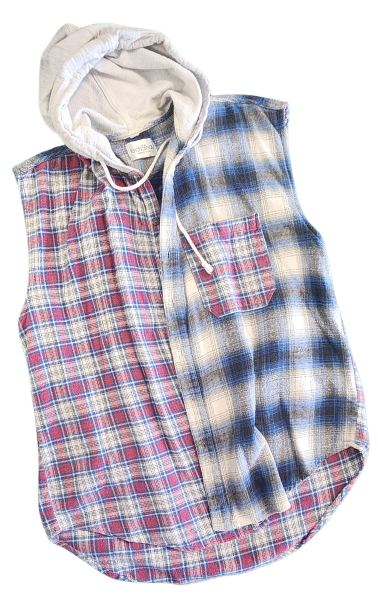
Plaid shirt.
AA: Okay, is this one of the plaids?
BB: Yes, this is the very first plaid shirt that I ever wore for drag. It’s a well-worn and comfy white, red and blue men’s sleeveless flannel shirt with a hood. I probably found it at Value Village, Village Green, or the Salvation Army Thrift Store – my three regular places to shop for men’s clothes. On that same hanger is a pinstripe vest from when I performed some of the shirt-and-tie numbers. But the plaid was what I wore most often, and certainly for most of the Dover Brother numbers. We all had several plaid shirts that we would change around each show. Other than that, we occasionally wore Hawaiian shirts.
AA: And would you usually perform at Louis’?
BB: The Louis’ performances were for a few of their annual events. We mostly performed at Divas – that was where we had a monthly drag show, and where I earned my drag king title. Sometimes we did events in Regina, and a few in Winnipeg.
AA: So you would travel sometimes to do shows?
BB: A bit, but personally, not a lot. Many of the drag queens travelled often, and to many more places than Dyke van Dick ever did. Queens often invested substantial amounts of time and money into their performing lives, and although I enjoyed drag, I wasn’t as committed to the extent that a lot of the queens were. I was happy enough to just perform at Divas and occasionally around town for various fundraisers and special events.
KEK: How many times, like, a month would you perform when you were kind of at your busiest?
BB: There was usually a monthly drag show at Divas, an annual queer gala, a few annual Louis’ events, and other events ‘by request’ such as fundraisers for various local organizations. The year I won the Divas Drag King title, I performed monthly because the drag queen I reigned with and myself were responsible for organizing, advertising, hosting and performing in the shows.
AA: At the time when you started doing drag, what was your everyday outfit like?
BB: During my healthcare career, what I wore depended on my job at the time. When I worked on a hospital ward or in the ER, I wore a hospital uniform and a lab coat. When I worked in office jobs, I dressed in women’s ‘business casual’ – feminine, but not overly femme, and certainly not butch. I didn’t advertise my drag life at work at all. That would’ve been too difficult to explain to too many people. Outside of working hours, I went through a few phases of what I wore, from femme to ‘soft butch’ to men’s tank tops, shirts, and cargo shorts or carpenter jeans.
AA: Can you talk to us a bit about how you would create the facial hair that you would use?
BB: It's surprisingly easy to dress for male drag. For facial hair, I would have my hairdresser save clippings of my hair in an envelope. At home, I’d put the clippings inside a pill bottle, and with a pair of fine-pointed medical scissors inside the pill bottle, I’d keep scissoring away until the hairs got so fine, it was almost like dust. And then, on performance nights, I’d glue it on with …… I can't think of the word for it...
KEK: Liquid latex? or spirit gum?
BB: Spirit gum, yes, that's the word – thank you! I’d use an eyebrow pencil to lightly draw the shape of facial hair I wanted, for example, of course, a Van Dyke beard, or just a goatee or soul patch. Then I’d apply spirit gum within the shape, reach into the pill bottle to get some hairs on my finger and press them into the shape I’d just glued on my face. For sideburns, it was easiest to draw the shape I wanted and fill it in with eyeliner rather than the cut hairs. For my eyebrows, I straightened and darkened their shape with mascara.
AA: Was there anyone who taught you those things, or how did you figure that out?
BB: It would have been one of the drag kings that was already performing that would have given me some tips and ideas, and then I just tried out different things at home.
AA: When you saw yourself dressed in drag and had all of your things, facial hair and everything, what was it like to see yourself in that way? Did you feel like it was still self-expressive, even though it was performative?
BB: It was definitely self-expressive. I believe there’s a whole spectrum of masculine and feminine within everyone, so performing drag was just expressing a more masculine part of myself in a way that society here typically views as maleness. Facial hair is one of the first visual identifiers for a masculine-type man, so that was always an aspect of my character.
AA: Did you learn anything more about yourself in the process of doing drag that drew you to it, or was it, you know, that the performance itself was just really exciting?
BB: Some of both, I think. It was incredible to feel free and safe when I presented as male. Wearing male clothing and having a semblance of male hair on my face and not carrying a purse marked me as ‘not female’ in a society that too easily and too often victimizes women far more than men. The exhilarating feeling of safety ‘as a man’ was something I’d never experienced before.
And part of the appeal of drag was the performance itself. Finding music I really liked and learning to lip sync to it, and acting physically ‘on stage’ in a way I wouldn’t normally do in my everyday life was a lot of fun. A male friend taught me how to walk, stand, and sit like a man, and he also had me pay attention to how men hold cigarettes. These were all things I hadn’t thought of before, and it took a lot of practice.
So, to recap – the opportunity to ‘dress up and play’, and to explore the masculine parts of myself, and to feel safe in the world were all aspects of drag’s appeal for me.
AA: Can you speak a bit to what it was like being perceived as male outside, like when you weren't performing? If I remember, you had told us a story about just walking to get a pack of cigarettes or something like that.
BB: Oh yes. The first time I realized I didn't have cigarettes to go to a drag show, I was already all done up in drag. Although smoking for me was more of a social thing, it also helped with my nerves, so I decided I needed to stop at a 7-11 on my way downtown. I was very self-conscious while waiting in line to get my cigarettes, but then gradually realized that people around me assumed I was a man. It wasn’t like anyone said “Hey dude!” or anything like that, but it was a completely different atmosphere surrounding me in a way I can’t even fully explain.
I don’t have a typically feminine voice, so even when I asked the store clerk for cigarettes, something he said made me realize he also thought I was the guy I was presenting myself to be. It was just fascinating to feel a little bit of what it's like to be a guy in the world.
AA: Was it uncomfortable to be perceived as male when you weren't trying to do drag? Did it bother you?
BB: No, it didn't bother me at all. I just found the aura of being perceived as male was really intriguing, and the feeling of safety was an amazing aspect of it all that I’d never anticipated. We talk about male privilege a lot, and I felt like I was having a little experience of that in my world.
AA: You mentioned the title that you won. What was it?
BB: Oh, the drag title I won was Mr. Diva’s 2008 / Mr. Gay Saskatoon 5.
AA: I wanted to make sure we get it right! And to give us the time frame. Well, thank you so much for joining us today and sharing your stories!
BB: It's been fun to answer all these questions and to remember the things today that I didn't remember the last time we talked. Thanks so much!
Poem: Dress Up
by Belinda Betker
Mom’s favourite skirt,
brown-sugared wool – rick-rack
and embroidery loop a traceable path
‘round and ‘round the flaring hem.
Her favourite blouse, satiny white –
Cute tomata! printed between
winking red tomato faces.
Gleaming pearl buttons fasten
the front and three-quarter length sleeves.
I button her top over my chest, flat profile
in the sliding closet-door mirrors,
gyrate my hips to swish
the skirt’s hula-hoop fullness.
Dad’s side of the closet –
his shirt sleeves dangle from the ends
of my arms, ties reach my knees,
his prized snap-brim hat
covers my face.
Years later, my mother remakes
her skirt into a hassock cover,
but her blouse hangs in the back
of my out-of-season closet,
while Dad's hat rests
on the highest shelf
in a dust-free box.

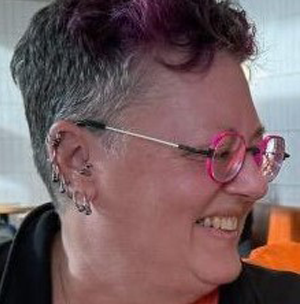
Belinda Betker.
BELINDA BETKER was born and raised in Yorkton, Sask. until the age of seven when her family moved to Saskatoon. When she was eighteen, she joined the Naval Reserves. She returned to Saskatoon in her mid-20’s, where she has lived ever since.
Throughout her 33 working years at the Saskatoon Health Region, she also envisioned ‘a writing life.’ Since retirement, Belinda has enjoyed concentrating on her writing and volunteering.
Belinda's poetry and award-winning haiku are in various anthologies, literary journals, and chapbooks. Her poetry collection, Phases, was a 2020 finalist for two Saskatchewan Book Awards. The second edition of Phases, published in 2022, contained thirty-one additional new poems. Belinda recently contributed to, and edited, “Unapologetically Queer”, a 2025 special edition issue of SHFS.
Belinda lives in Saskatoon with her Australian wife and their rescue dog, a springer-spaniel/terrier cross.
“people stories” shares articles from Folklore Magazine, a publication of the Saskatchewan History & Folklore Society. Click below to learn more about the Magazine and to find out how to get your story into the blog!