
An Interview with Carl Krause: Fashion History
This article is part of our oral history series on clothing and dress in Saskatchewan. It was originally published in Folklore Magazine, Winter 2025 Edition. This interview was conducted in summer 2025 by SHFS Student Researcher Aydrian Alegría and SHFS Executive Director Kristin Enns-Kavanagh.
Kristin Enns-Kavanagh: This is exciting, our inaugural oral history interview for this summer.
Aydrian Alegría: Thank you so much for joining us for it!
Carl A. Krause: Well, we'll see how it goes!
[They laugh]
AA: So, first, for some general context, can you tell me about where and when you were born and where you grew up, please?
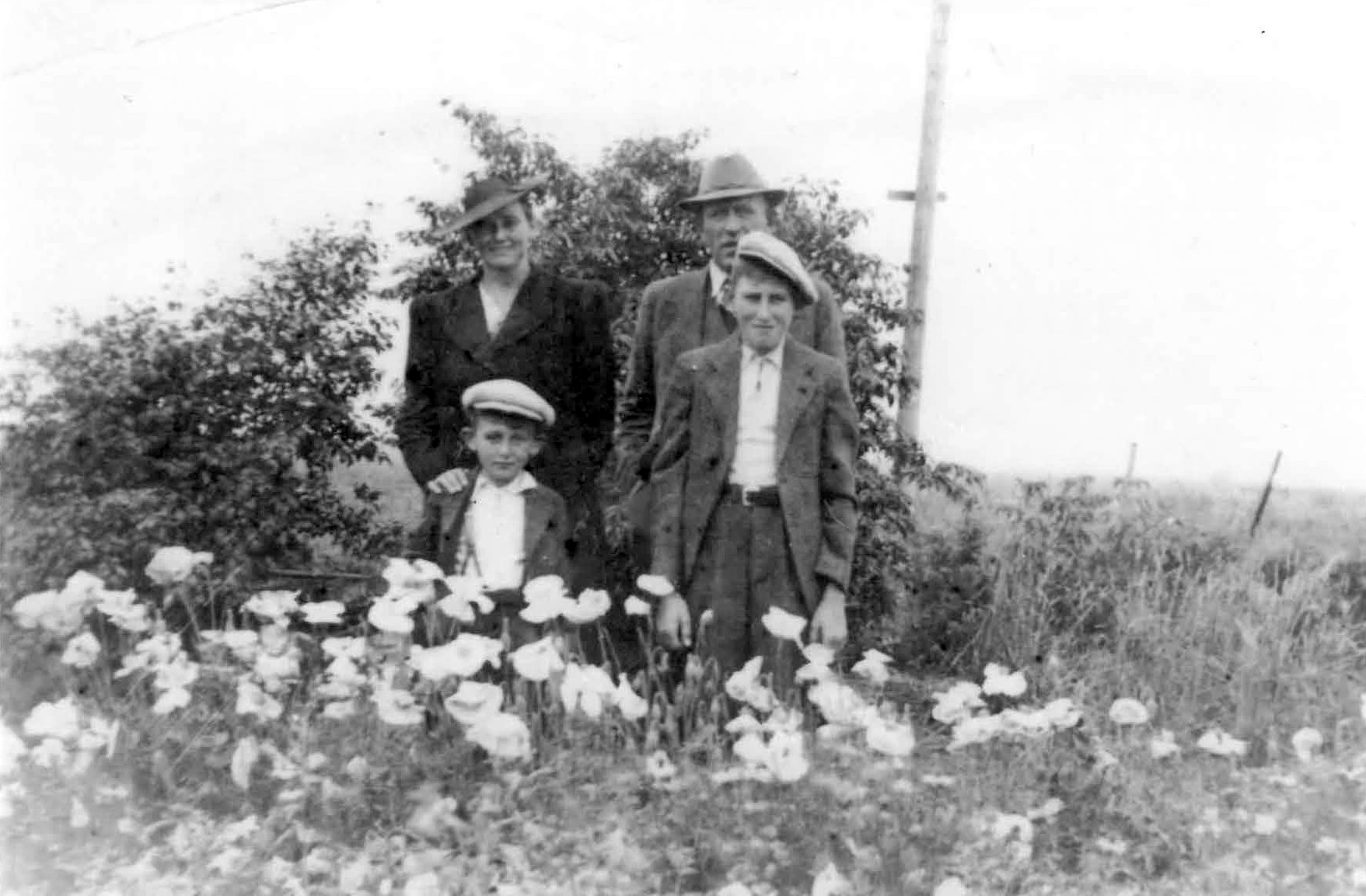
Carl Krause and family, 1942.
CAK: I was born in 1936 on a farm seven miles northwest of Rosthern. I was the second of two children. I had one older brother; he was seven and a half years older than I. We lived on that farm until I was almost three and then we moved to what was known as the Krause Farm. And I stayed there until I was 18 years old and had finished high school. The Krause Farm was 10 miles northwest of Rosthern, more in the Carlton District.
AA: Okay. And what type of farm was it?
CAK: Ours was a so-called mixed farm. We had three quarter-sections of farmland. And we grew wheat, oats, and barley. My dad and my grandfather had dairy cows, 12 of them. Milked by hand, of course. And we also had about 60 pigs, and about 30 chickens. Everyone was busy.
AA: When you were a boy, what sorts of outfits did you wear on the farm?
CAK: Usually, I wore overalls. Summer and winter. And, if there ever were trousers other than overalls, they were held up by suspenders. My shirts: my mum made my shirts, and they were either cotton or flannelette. If there were left-overs and bits of clothing, then she would sew the leftovers together and I’d have multi-colored shirts! Probably the only kid in school who did.
My mum often knitted my socks. I always [wore] leather work boots. In the summertime, I wore what was called an engineer's cap, striped. In the wintertime, I had a leather cap, which was lined. And it covered much of my face. It looked like an aviator’s hat but it was very warm, very comfortable.
AA: Great. And what about for nighttime? What did you wear for pajamas?
CAK: Nothing.
AA: Nothing?
CAK: Just my underwear!
[They Laugh]
CAK: Long Johns in winter. And a combination of sorts in summer. They weren't shorts because they covered the shoulders as well, and you stepped into them. And they were quite a trick for a boy to put on. They sometimes came on backwards!
AA: I noticed you had some stories written about going to church with your parents and grandparents. Could you tell me about what you were wearing then?
CAK: Going to church was special. My mother was a minister's daughter and so there was no question… we went, and we were always dressed up. From the time I was probably seven or so years old, I wore a suit and a dress shirt, and a tie that my father tied. I also wore special shoes, Oxfords.
AA: Did you enjoy wearing them, the fancier clothes?
CAK: Not particularly. Because then I couldn't do the things I wanted to do, like rough house, and so forth. You had to be good!
AA: [laughs] And at school, what kind of clothing would you wear?
CAK: I was looking back through some of my school photos. And until I was probably 10 or so, I wore overalls. After that I started wearing breeches, at least in wintertime. They were puffed out, riding breeches that came down to below the knee and so you wore high stockings with them. I don't remember particularly when I stopped wearing those, perhaps when I was about 13, 14, something like that.
After the Second World War, or toward the end of the war, parkas became something that we could wear. That would have been the mid-1940s, we started to see more parkas. They were an outgrowth of wartime wear, military wear.
AA: Did you have any other military wear in your family?
CAK: No, not in my family. My brother wanted to join the military, but he was too young when the war ended. I had a couple of cousins that were in the Second World War, but they were considerably older than I.
AA: Okay. So, from the outfits of your childhood, which was your favorite?
CAK: My favorite was whatever I wore to school. I loved going to school. I always had good clothes to go to school, not everybody did. But our family, there being just two of us from the family, there was never a shortage of outfits. And I didn't get any hand-me-downs, because my brother was too old.
AA: You talked a little bit about the switch from overalls when younger to using the breeches instead. Were there other changes in clothing [entering] teenage years?
CAK: In the late 1940s, all of a sudden we weren’t wearing dress shirts buttoned to the top, they were open. We started wearing shirts with short sleeves, as well as shirts that were worn outside our trouser tops. Much more casual.
Hairstyles—they changed in high school. And I went to high school for… from 1950 to 54. We had everything from brush cropped boys, to really long hair, which was, it was considered long at that time, but it was the Elvis influence.
Hairstyles—they changed in high school. And I went to high school for… from 1950 to 54. We had everything from brush cropped boys, to really long hair, which was, it was considered long at that time, but it was the Elvis influence.
AA: I remember you were talking to us about the formal expectations when you became a teacher. Could you talk to us about what you wore when you started that?
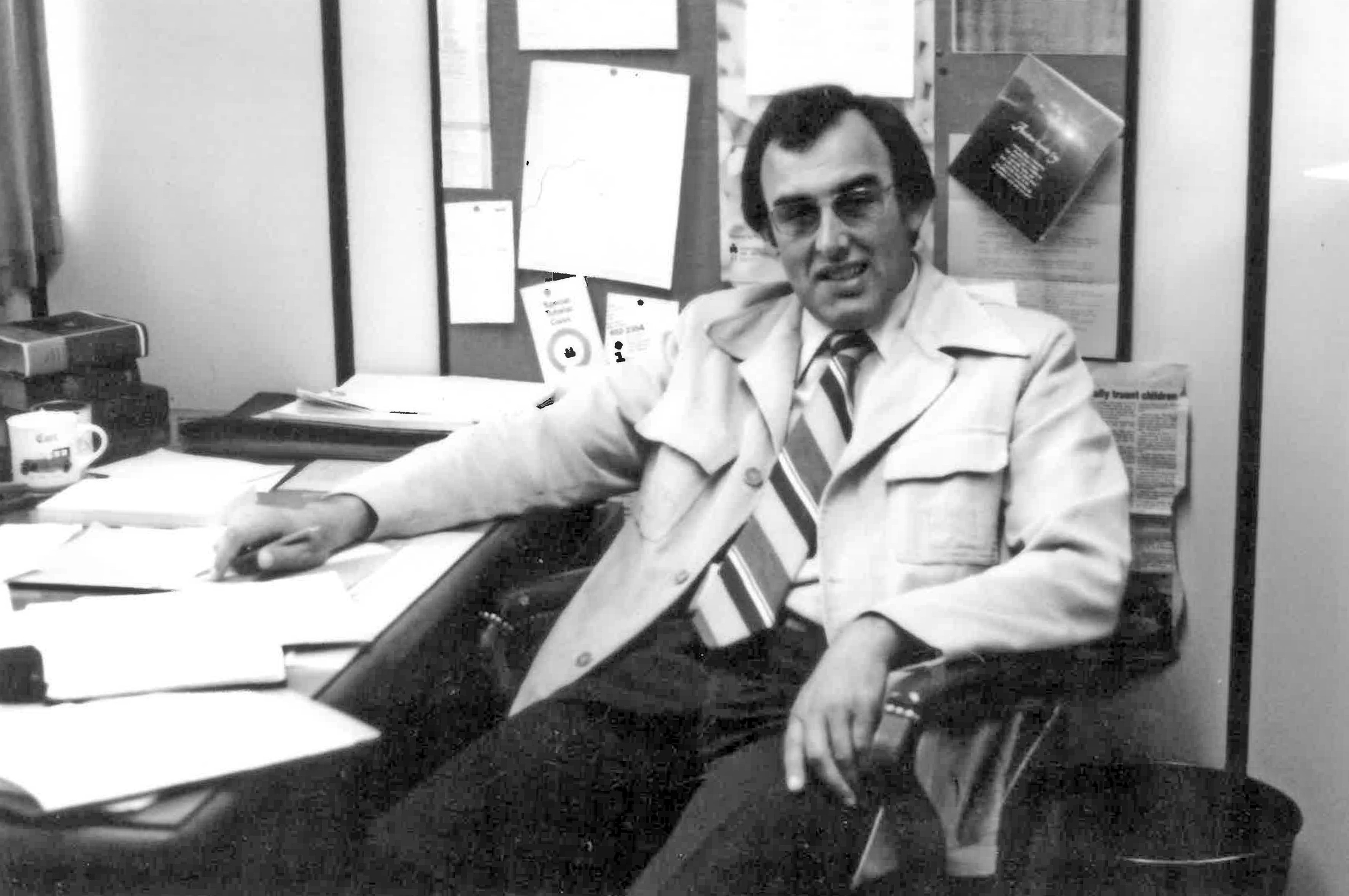
Carl Krause, 1978, dressed for work in his role as Assistant Superintendent, Pupil Services Department (Saskatoon Board of Education).
CAK: We dressed up to teach. I wore a blazer, a shirt and tie, and good slacks—and Oxfords. It was just expected that we would be dressed that way. I taught Phys. Ed dressed in my good clothes! And I think of the women that I taught with, in the earlier years, they all wore skirts. There were no slacks. Unless it was a special day, like a sports day or something like that.
AA: Would you tell me please about how you got the clothes you needed for work?
CAK: As a kid, we got most of our clothes in Rosthern. There were two stores. They were small stores, but they were good. Then in the late 1940s, Friesen’s Department Store came into Rosthern.
When I started teaching in 1955, I opened an account at Friesen’s, and for $40.00 a month, they kept me outfitted. Which is really kind of crazy when you think about it now, forty dollars a month! And I bought my shirts and my slacks and whatever else out of that money. It seemed to work.
AA: Yeah! You also were talking about how you wore caps as a child. And then once you started teaching, a hat, so what was the adult hat like?
CAK: It was not as large as a cowboy hat, but it was quite large, and that was the style of the time. And I remember as a first-year teacher, purchasing a hat like that. I can still see myself walking down the main street of Laird where I was teaching. And the kids looking at me and saying, ‘where did you get the hat?’
AA: Stylish! And did it feel to you like a moment of coming into adulthood when you got your men's hat?
CAK: You know, I haven't thought about that, but I think the answer would be yes, because ‘til that point in our family, the only other person who wore a hat was my father. Yeah. I can still see the hat…
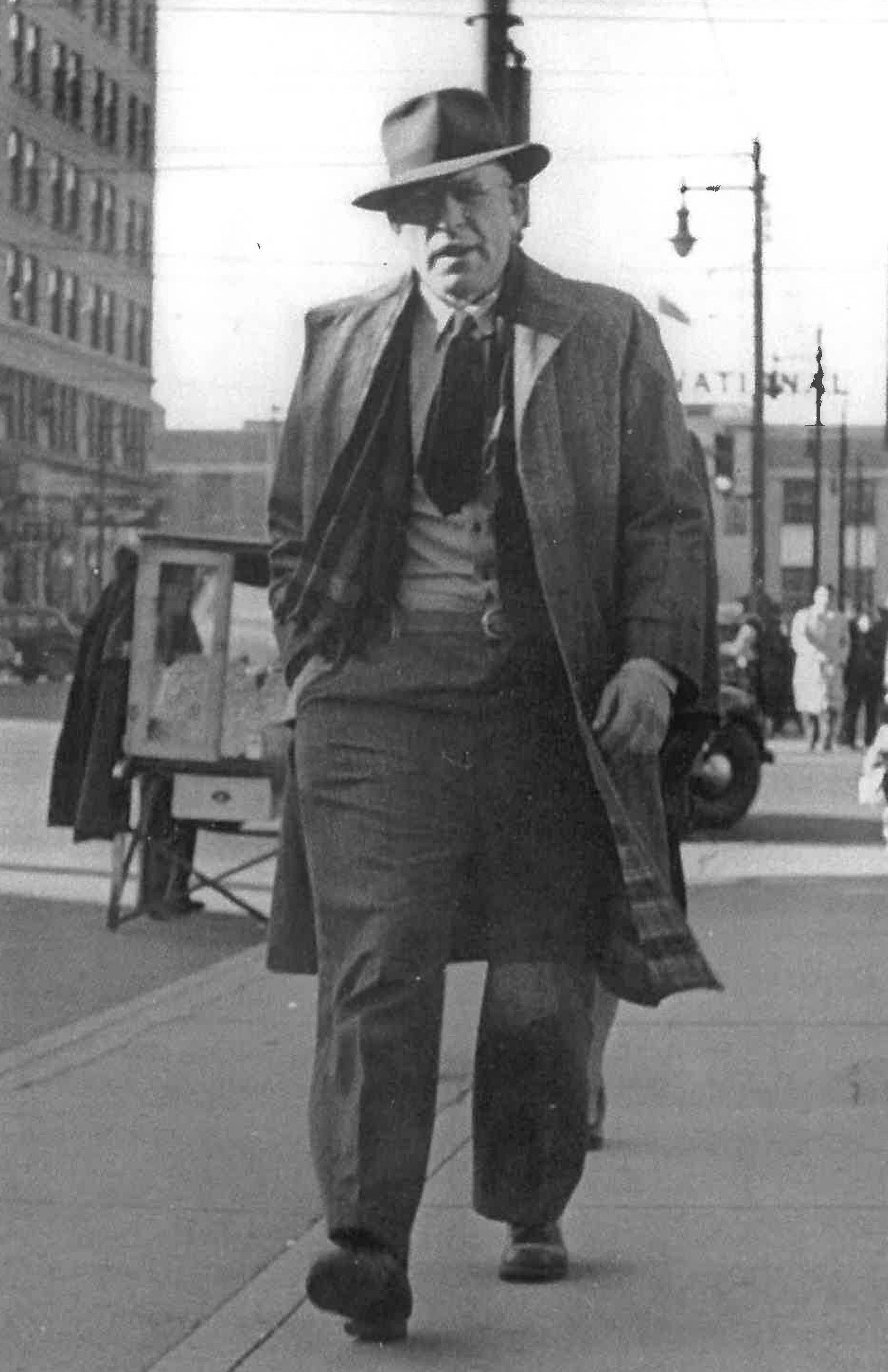
Carl's father, Ben Krause, circa 1951.
AA: You’ve talked about how the dress became less formal over time. Was that something that you noticed as it was happening? And was that comfortable to you, or did it feel strange?
CAK: I didn't feel uncomfortable with it. There were others though, that were colleagues of mine who did. I can remember a principals’ meeting here in Saskatoon where the topic of discussion was “What can male principals wear to work.” And, there were the old guard who said we have to wear shirts and ties, blazers, and suits. And there were the young guys who said, no, we can [dress] less formal.
AA: Through all the different styles that you've seen over time, or of dress in your own life, which did you enjoy the most?
CAK: Probably my teenage years where we experimented with different things. Like, sometimes we wore a leather jacket when it was bitterly cold. Other times, we wore something in summer which was far too hot. And we let our hair grow far too long, and experimented with different combinations of clothes. I will take my teen years. Yeah, I think if my parents were here, they would be saying, ‘yes.’
AA: Going back to your parents and grandparents. What kind of clothing did they wear on the farm?
CAK: Well, interestingly, my grandfather, who was born and raised in Kansas and Indian Territory, which became Oklahoma, wore blue jeans. He was the only one in the neighborhood who wore blue jeans, I have no idea where he got them from! But he wore blue jeans.
Grandmother—I can't remember that she ever wore anything other than a dress. And it was long. That was how she usually dressed even going to work, except with an apron over top. Then, for special events my grandfather always wore a suit and a hat, as did my dad.
Kristin Enns-Kavanagh: Were there any rules about hats for men? Like when is the hat on, when does it come off?
CAK: You take it off when you come inside. Unless you're downtown shopping, then you keep it on.
KEK: Ahh.
CAK: Or if you went to an implement dealer or whatever, it stayed on, but if you came into a house, the hat came off. And church—heaven forbid you wear a hat in church! You took it off.
AA: But you had to wear it to church?
CAK: Oh yes! I have pictures of the family, church related pictures, the men all wore hats. If they weren't wearing them, they were holding them. So, they had them, yes.
AA: Was it explained to you why, for church it had to be formal? Where that expectation came from?
CAK: I have no idea, but I know it wasn't just our church. All the churches in our area were like that. Things changed a lot after the Second World War.
When the soldiers came back, they looked at things differently than those who had not been in a war. And that applied not just to their behavior, but also to how they dressed, how they looked. Some of it may have been a financial necessity, because they didn't have a whole lot of money coming out of the war.
KEK: Can you say more about that? With the soldiers that came back, did they tend to be more casual?
CAK: Yes. They were. They did things like rode big motorbikes while no one else did. They took any kind of job that was available in the community. I don't want to–I don’t want to paint them as being desperados or anything like that, but they had learned so much about the constraints of culture. Those constraints had changed for them. I had—oh actually, I don't know how many cousins I had that were in the military. They were like that when they came back, just different guys. A couple of them were not very well. One of them, I think, particularly, wasn’t, had been severely shell-shocked, but he still managed okay.
AA: Military expectations are very specific and intense on what they had to look like: which haircuts, outfits, etc. So, I wonder if that just led to them wanting to— not have to worry about it as much?
CAK: My son was in the military for quite a few years and that was certainly his case. He enjoyed his time in the military tremendously, but he was also relieved when it was done. We noticed it in his behaviour, and also how he looked. He could let his hair grow long, that kind of thing.
AA: How long have you had your hair before? What’s the longest you’ve grown it?
CAK: We lived in Arizona, in the mid 70s, my hair came down to my shoulders.
AA: That’s quite long! I can see you’re clean shaven now as well, but…
CAK: [Gestures to his scalp] Well, stuff has disappeared.
[They laugh]
AA: What about facial hairstyles?
CAK: Oh, yes, yeah, mustaches and so on? Yeah. I grew a beard once; I was still taking my master’s here. [Now], where we live, we're in a seniors’ complex. We've got some guys with beards, we've got some guys with huge mustaches, and others are like me. And the same thing with the women, they have all kinds of different styles. Of hair, and clothing.
KEK: Before we end, if you could give us your parents' names on both sides? Future genealogists will love you for it.
CAK: Yes, okay. My dad's name was Bernhard Krause. My mother's maiden name was Helena Epp. My grandparents on my father's side were Cornelius and Elizabeth (Nickel) Krause. And on my mother's side, it was Gerhard and Katharina (Janzen) Epp. Grandfather Gerhard Epp was among the first Mennonite ministers in the Northwest Territories. He and his young family came to Canada from Russia in 1893.
The Krauses came from Oklahoma in 1918. My father and his three brothers were all teenagers when they came to Canada. They came because of the U.S. government being back and forth in 1918 about who's going to be conscripted and who is not. And my grandparents finally got tired of this because their two oldest boys, who were twins, were coming of draft age. And it wasn't that they were opposed to war, they were opposed to this “yes, and no” business. So, they finally decided to come to Canada where the laws were very clear on who would be conscripted, and who would not. Of course, by the time they got here, the war was over, but that's another story.
AA: And did they come to the Krause Farm?
CAK: Yes, they purchased it in 1918. The previous owners had homesteaded it and they left it for whatever reason and my grandparents bought it in 1918. My parents bought it in 1949; my brother bought it sometime in the 1960s and my nephew bought it in around 1990. But he sold it. He didn't keep it. But it went through 4 generations of Krauses.
KEK: Excellent.
AA: Great. Well, I think that's all we have for you. Thank you so much for joining us again.
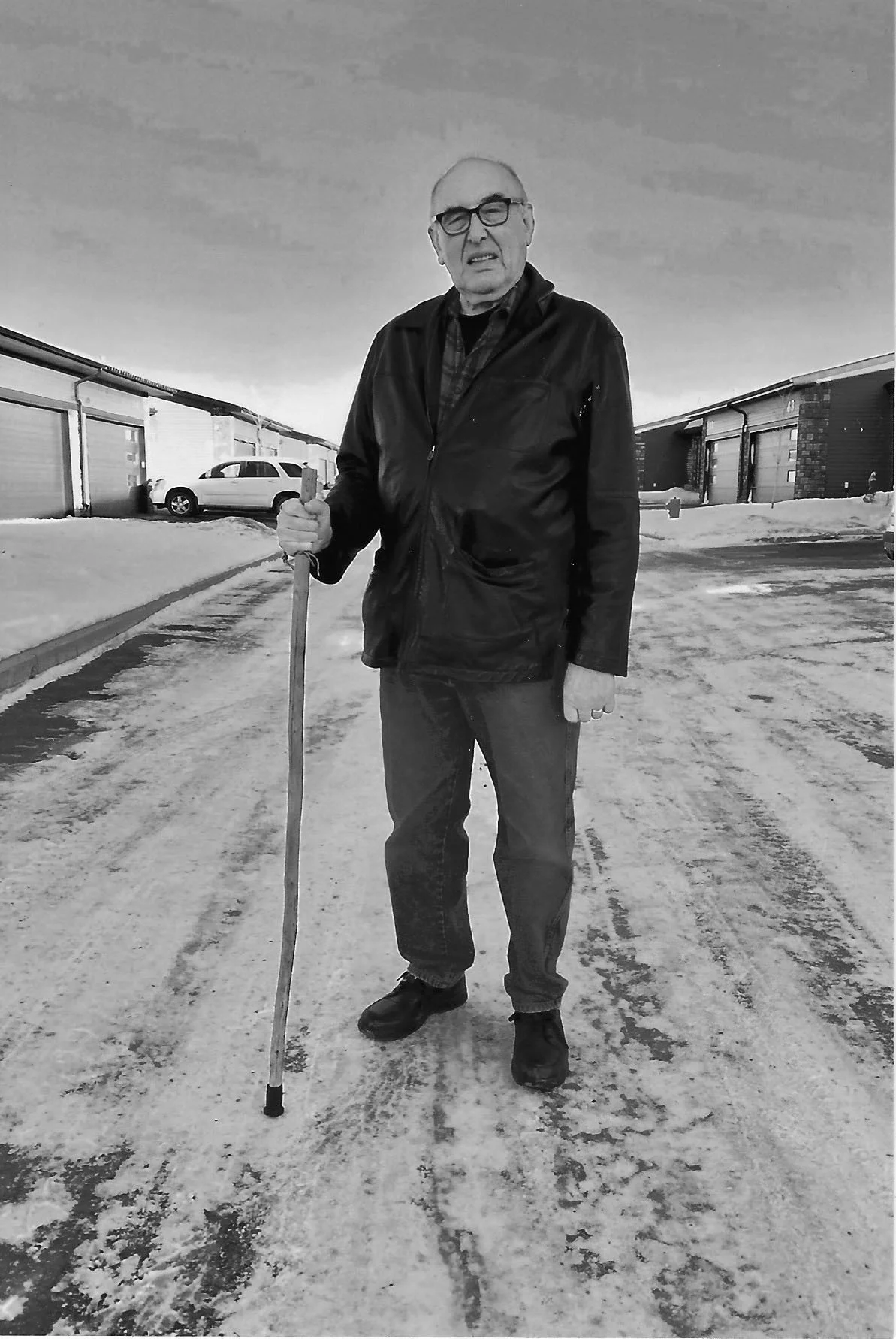
Carl Krause.
CARL KRAUSE is a product of Saskatchewan. He spent his years working in education and has more recently devoted his attention to researching projects in local history. He is a frequent contributor to Folklore. He and his wife, Lily, live in Saskatoon.
“people stories” shares articles from Folklore Magazine, a publication of the Saskatchewan History & Folklore Society. Click below to learn more about the Magazine and to find out how to get your story into the blog!