
The Healing Power of Gardens
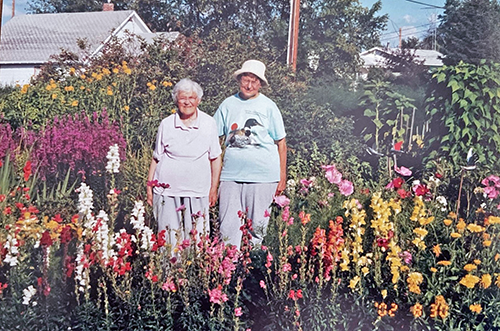
Mary Ann Slonowski and Beth Melnyk in the Kelvington garden in the 1990s.
Standing in the middle of the overflowing garden, she observed the pinks of the mallows, the ferny textures of the asparagus, and, reaching out a tentative hand, she felt the smooth leaves of the gas plant. Slowly, her overwhelming grief and loneliness started to clear from her mind, if only temporarily, as her eyes fastened on to a dandelion amongst the scarlet runner beans, and then she spotted a fledgling thistle trying to crowd out the gladiolas. This recognition pushed further through the mental miasma that she was experiencing.
Kneeling down, she started to pull weeds out of the ground. One by one, they piled up on the grassy edge of the garden, letting the sun naturally wither them. Moving the draping stems of petunias aside, she found some tiny spruce seedlings. Out they came, joining the growing pile of weeds.
Mary Ann Slonowski had learned about plants and what they needed in terms of care from her own mother while growing up in Kelvington, Saskatchewan. Their names, their growing habits, when to water, signs of stress and which plants were invasive and needed to come out. This early exposure to her mom’s love of growing fostered Mary Ann’s own appreciation for all things green and flowering. Even today, in her eighties, “I really enjoy growing all kinds of things, you just give me an inch of dirt and I'll plant something,” she said.
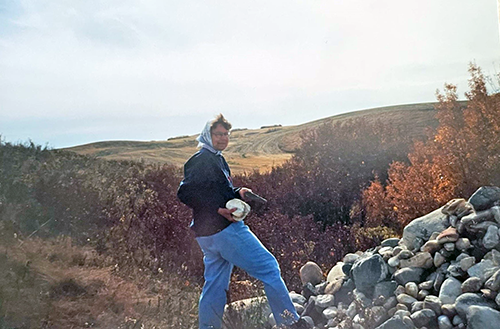
Mary Ann at the Slonowski farm in the 1960s.
Raised in Kelvington from 1942-1961, Mary Ann spent much of the warm seasons of her youth helping out in her mother’s gardens, planting, tending and harvesting. Then there were the hours spent preserving that bounty as pickles, jams and preserves. That training stayed with her when she moved to Saskatoon after her nursing training.
In the city, she found work as a nurse, but her heart remained in the soil. When she met and married her husband, John Slonowski, in 1966, it probably didn't hurt that he owned a farm.
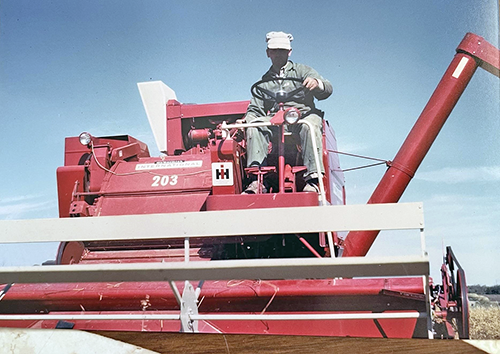
John Slonowski on a combine in the 1960s.
They shared the dream of growing a family, in a hybrid fashion, as suitcase farmers, with a house in Saskatoon and weekly travel to the farm, an hour east in the St. Denis area. Mary Ann maintained a large veggie garden from 1966 to 2000.
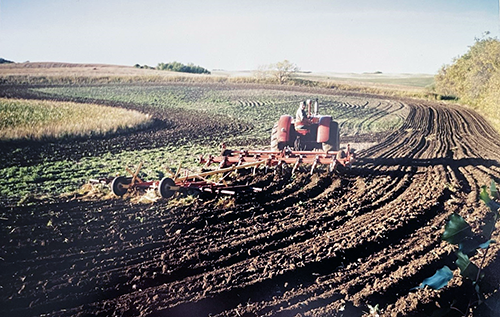
John Slonowski on a refurbished tractor and and plough on the farm in the 1960s.
All this ended in December 2000 when John died, from colon cancer, aged 66.
When this happened, Mary Ann experienced an overwhelming feeling of loneliness, confusion and wondering how she could manage on her own, in the months that followed. Wandering around her now empty house, often just sitting in the living room not seeing the things around her, and losing any sense of time, her daughters saw she was not eating regular meals any more. When things did not improve for her over that first summer, Emily, her middle child, decided to intervene.
Packing her mom up, they went to Kelvington and showed up at her childhood home. On the doorstep, Bessie, her mom, greeted them, but with a bit of confusion herself. “What am I going to do with her?” she asked her granddaughter.
Explaining that Mary Ann was not doing well on her own and that everything her sisters had tried had not helped much, Emily asked if Mary Ann could rest and recuperate with her for a while. Echoing these same thoughts, though not as forcefully, Mary Ann looked at her mom and asked, “Can I stay with you? My house is too empty and I feel so small in it.”
Won over, Bessie shushed them inside and gave them afternoon tea and cookies.
Emily left the next morning, hoping for the best, knowing that Bessie knew Mary Ann better than anyone.
Mary Ann spent that morning looking out the kitchen window, not really seeing anything, until an anise swallowtail butterfly fluttered by and landed on the widespread petals of one of Bessie’s gladioli. Following the movement of the butterfly’s wings, a small want started to form inside her mind. There was life out there, and she wanted to go out and see it.
Barely bothering to lace up her shoes, she rushed out the door and wandered into the leafy green of her mom’s huge mixed flower and vegetable garden. Standing in the heart of it, Mary Ann turned her face to the sun, eyes closed and just let the scents of the flowers fill her nostrils, and the heat of the morning penetrated her skin.
Standing like this for several minutes, her soul started to feel at ease for the first time in months. It had been a very hard year. She had cared for her husband over the last months of his life and then another half year, mostly alone in her empty house. But here, in this garden, where her mom’s love and kindness grew out of every stem and flower, Mary Ann finally felt at home.
Finally looking down, her muddled mind started to recognize the different plants, putting names to flowered faces. Running her hands over some of them, like over the shoulders of long parted friends, her fingers stopped when they got pricked by the spiny leaf of a thistle.
Half on trained instinct, half on wanting to care for this renewed sense of place, Mary Ann bent down and looked more closely at the prickly intruder. She pulled that thistle out of the earth and threw it to the edge of the grass. Turning back, she saw some hairy vetch creeping in among the delphiniums. Grabbing a thick handful at the base of their stems, she yanked on these too, hearing the roots tear before she threw them on the thistle.
Something started to ease inside her. “That frustration, just throwing the weeds out, it helped. Just throwing away your grief, in a way,” she said. The healing started that day, in her mom’s garden.
Over the next month, Mary Ann was out in that garden right after the breakfast dishes were dried and put away. She often had to be called twice for lunch, and Bessie had to holler at her from the edge of the garden to come in for afternoon tea. The only other breaks she took from that garden were for evening walks around town.
The time alone among the flowers allowed her to truly take in the nature around her, listen to the birds, and watch the bees zip from flower to flower. Watching the progression of the flowers bloom then dry up allowed her to start to come to terms with her own loss and to see a future for herself that had started to form in her mind.
After that month, she started to think of her own garden; things that she had cared for were probably feeling neglected. Her house also came to mind. “I had things to do with my house and my yard. Just had to get going,” Mary Ann said.
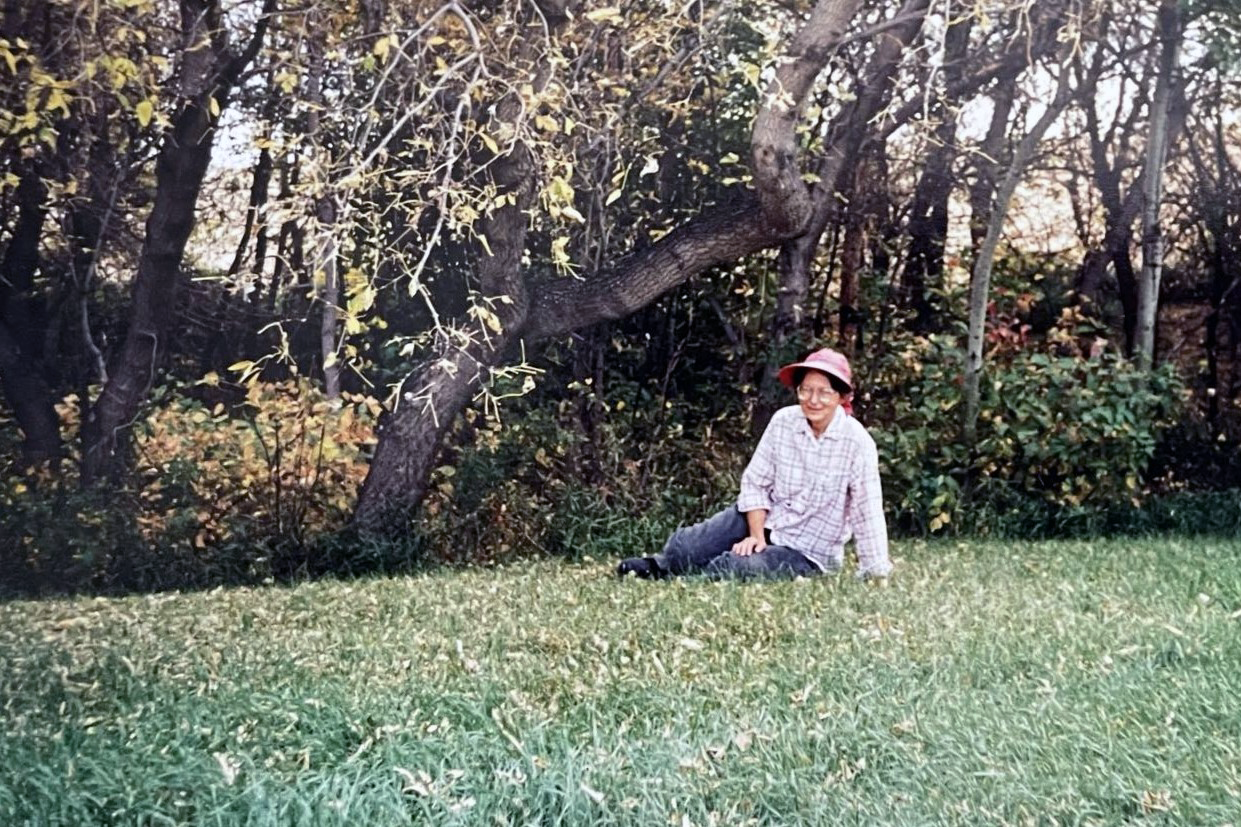
Mary Ann at the Slonowski Farm in the 1990s.
Now decades later, that time in her mom’s garden has left a lasting imprint on Mary Ann. In her own garden in Saskatoon, “I have to be out there all the time. Even if there's no weeding to do or no deadheading, I'd just like to sit out there and just look at the flowers,” she said. When she has stressful days, and there have been quite a few with older grandchildren under her roof, she’s found an outlet in her garden, a place that is truly hers alone.
“It's a really healthy hobby because you just forget about everything that has been going on through the day and your mind is just on the garden and at rest,” she says to any aspiring gardeners. Even if it’s only one tomato plant, watching a plant progress from seed to flower reminds you that there is more to the world than the human struggles and stresses that can press in on you. Look at the green outside your window and let it draw you out the door and into something that brings new developments every day, as those plants inch upward with new growth and open your perception to the wonders of nature and all the life that lives there.
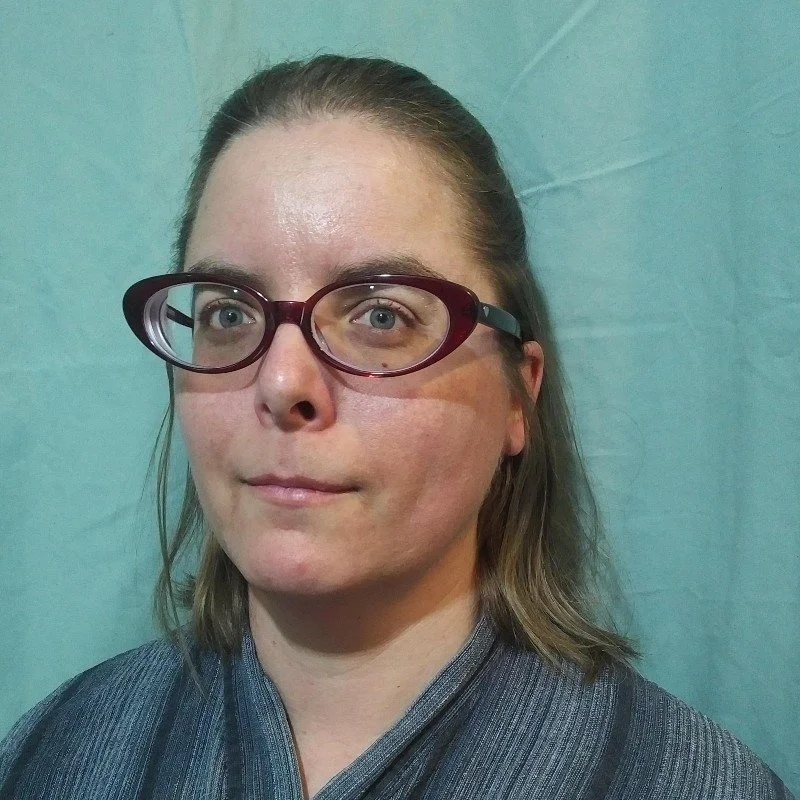
Adeline Panamaroff.
ADELINE PANAMAROFF is an Edmonton-based writer. While she writes about her own gardening adventures, she thinks about the generations that came before, her mom and granny. When not writing, she is keeping their gardening knowledge alive in her various guerrilla gardening plots.
“people stories” shares articles from Folklore Magazine, a publication of the Saskatchewan History & Folklore Society. Click below to learn more about the Magazine and to find out how to get your story into the blog!