
A Legend was Born
This article was originally published in the Winter 2019 Edition of Folklore Magazine.
My grandmother, Mrs. Philomene Allary, had an Indian pony mare who was dubbed “Olive.” At the Indian Pony races in Yorkton and Saltcoats, Uncle Isadore won any time he and Olive entered, riding with just a halter for guidance around the half-mile track.
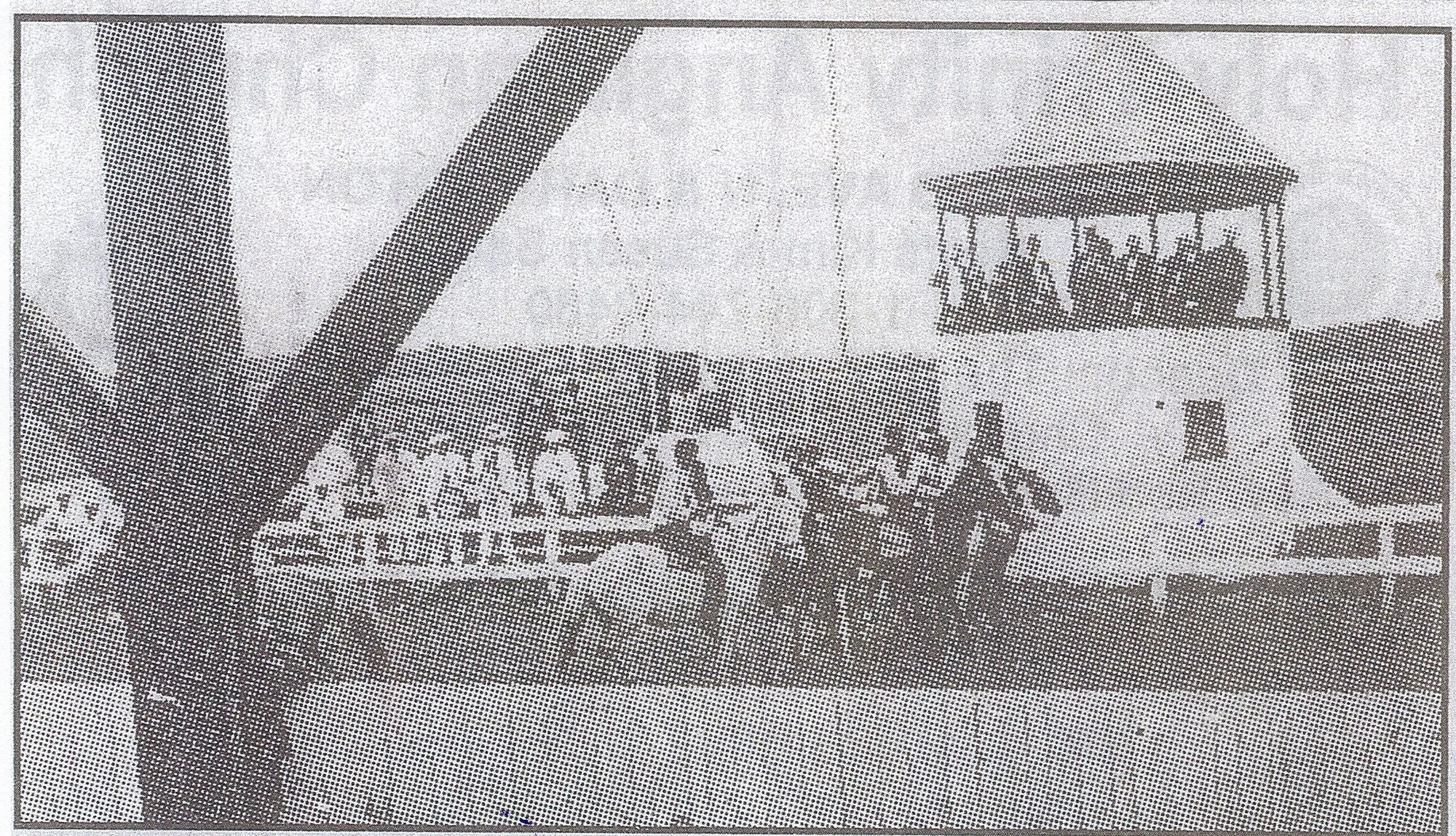
Pony races at the Yorkton Fair, 1920s.
Olive swam across York Lake and got bred by a horse that ran in the steeple races in Britain. A British family had imported this horse. A colt was born from this union. Mrs. Allary gave him to her son, Isadore, but by this time Isadore had married and joined the army. The British family came and tried to extract a stud fee from Mrs. Allary, but she stood her ground and said that if a horse of that calibre is accessible by water, the negligence is on the owner of such animal.
Right away my father, Walter Shingoose, recognized this colt as a full-fledged racetrack horse. So, the training of the horse fell into his hands. He dubbed the colt “Chief Running Water.”
In his youth, Walter had been a “bug boy” at the racetrack in Winnipeg. A bug boy is one who exercises the racehorses and cleans the horse stalls. Sometimes Walter would go down to the river and eat with the hobos, in a place called “the Jungle.”
I, his son, Wilmar Shingoose, was the first to ride this horse when the colt was two years old. I rode him while my dad was leading him around.
Chief Running Water was not a high spirited or nervous horse. In fact, he had to be coaxed to move. However, he had the stamina of a steeple chaser.

After proper training and care, the young horse was ready to go and take on the thoroughbreds at the Saltcoats Sports Day. Walter tied Chief, as he was called, alongside one of the wagon horses, and off to Saltcoats we went, about 12 miles.
The next day, the horse races were on, and Walter found a young fella by the name of Earl Holland to ride Chief in the one-mile race. As usual, Chief had to be coaxed to the starting line.
They had to race around the half-mile track twice. On the first time around, Chief was way behind (last in the field). However, on the second time around, you could see him in the back stretch passing those other horses. He came home way ahead of the other horses. No longer were the Métis poked fun at, at the racetrack.
I think Walter, my dad, said the payout was $15.00 of which he gave my grandmother Mrs. Allary $10.00. The jockey Earl Holland probably got $1.00.
Some time later that same summer, Walter knew of another sports day in Broadview, Sask. So off to Broadview we went, with Chief tied alongside one of the wagon horses. We went via Crooked Lake Métis settlement, 45 miles away. Broadview was another 15 miles. However, we camped in Crooked Lake at Fred and Yvonne Henry's place. The next day, on to Broadview.
As was expected, Chief was entered in the one-mile race (jockey unknown) and he won it. Walter entered the half-mile foot race, and he won that one too. So, Broadview was very lucrative for this pair of runners.
Some time later, Uncle Isadore came home from the army, very pleased with what Walter had done with Chief. The next year again he took Chief to Saltcoats Sports horse racing, with the same results.
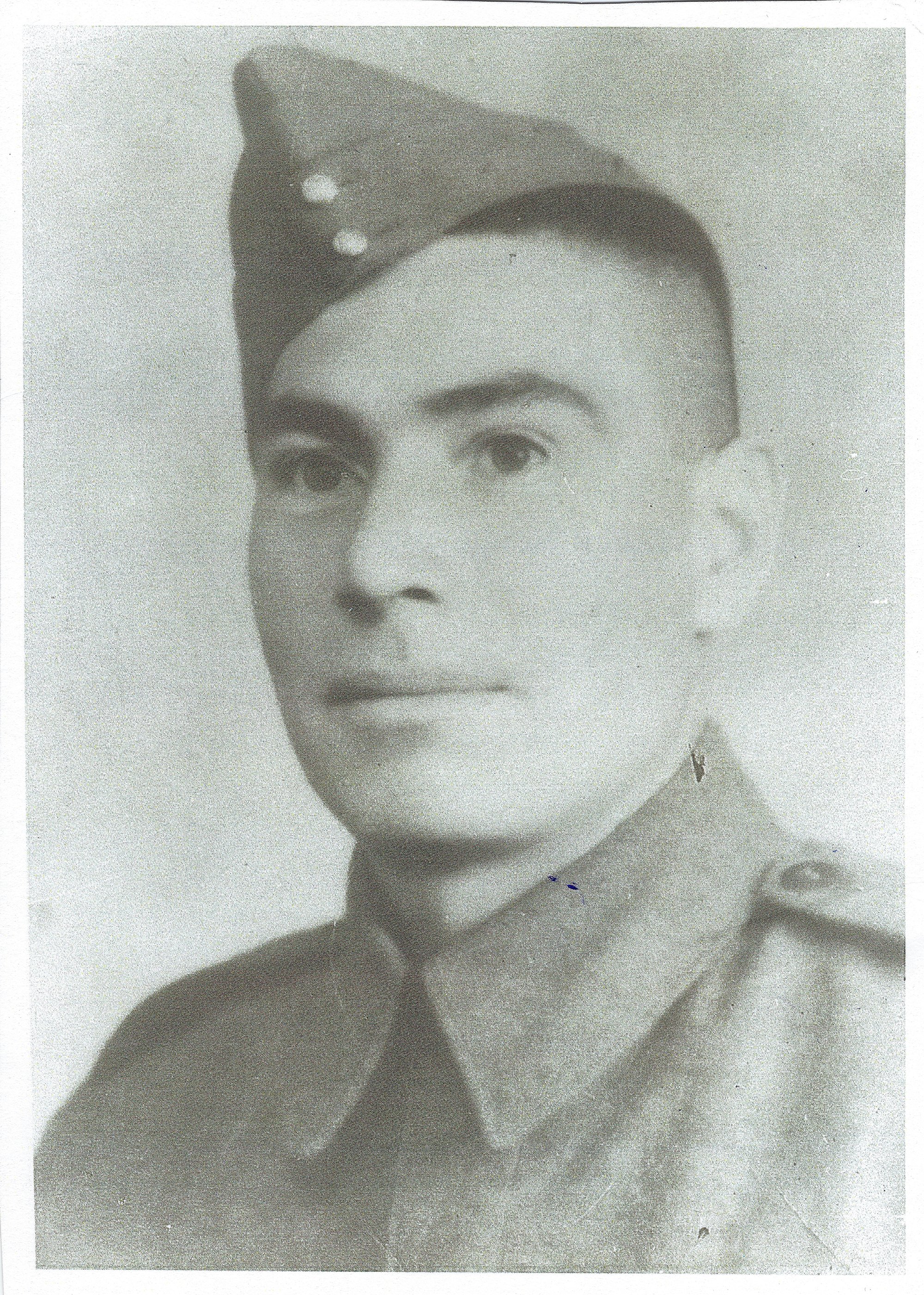
Isadore Allary.
However, Emmett Moore, of Moore taxicabs of Yorkton, had brought a mare to run the half-mile race, and she won. Emmett Moore really took notice when Chief ran the mile race and won.
Emmett Moore had a two-horse trailer, and he approached Uncle Isadore to have Chief and his mare go to different sports days that had horse races. Now Chief would be riding in a two-horse trailer pulled by a taxi, a big step from him tied and running alongside a horse pulling a wagon. Mac Wiseman was the taxi driver.
Emmett Moore’s taxi service operated in Yorkton and was the main way to drive the twelve miles south from Yorkton to Crescent Lake prior to the 1950’s. My father got a car around 1951, and then some others did too, but before that, you had to hitchhike or take Moore’s taxi. It cost $3 to have the taxi come from Yorkton to Crescent Lake, but you could get on the return trip to Yorkton for free, since the taxi had to go back anyway. Emmett Moore had three sons: Tommy, Ivan, and Pinty. Tommy and Ivan drove the taxis as well. The last driver for Moore’s taxi service, sometime in the 60s, was Charlie Taylor, a veteran who had lost both his legs in the war.
The first place they went to was Grandview, Manitoba. They both won there. The next place they went to race was in Melville, Sask., and then on to Balcarres, and then Indian Head. These horses could not be defeated at these small tracks.
Isadore Allary’s Uncle Shorty Pelletier followed these horses from racetrack to racetrack. The two horses were always underdogs, so Shorty claimed he made more money betting on them than the horses did from their prizes.
However, I think about 1948 Isadore Allary and his wife Margaret parted in marriage and Isadore was devastated. He kind of lost control of himself.
A member of Parliament from Saltcoats, Jim Snedker, had a horse racing friend from Colorado U.S.A. and told him about Chief Running Water and his stamina. The man came up with a horse trailer and offered Uncle Isadore Allary $48.00 for Chief Running Water. Uncle Isidore accepted the money, and Chief was off to Colorado, U.S.A.
The next year the man from Colorado wrote to Jim Snedker and told him that Chief, on his first race down there, had paid for himself, as well as the trip to Canada and his feed for a year.

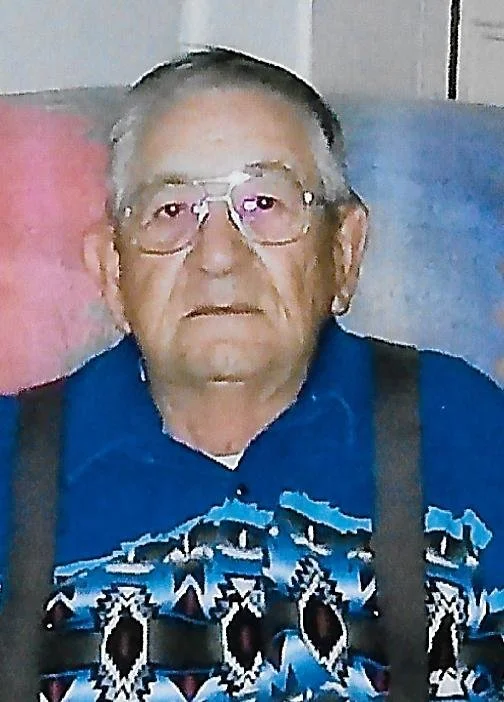
Wilmar Shingoose.
WILMAR SHINGOOSE and his wife, Ruth, currently live in Lethbridge. They have two sets of twins: two boys, two girls, all very successful. Mr. Shingoose has retired after 35 years of driving long-distance trucks. He also drove in the ‘Ben Hur Chariot’ category in Chuckwagon racing.
“people stories” shares articles from Folklore Magazine, a publication of the Saskatchewan History & Folklore Society. Click below to learn more about the Magazine and to find out how to get your story into the blog!